
Sep 16, 2026Technical Blog & Machining Tips
What is a Carbide End Mill and How Do You Choose the Right One?
Struggling to select the right tool for your CNC machining operations? You're likely facing a wall of technical specifications, marketing claims, and confusing options that make a simple purchase feel like a high-stakes gamble. This confusion often leads to costly trial-and-error, broken tools, and scrapped parts. This guide will teach you how to ask the right questions to find the perfect carbide end mill and a supplier you can trust.
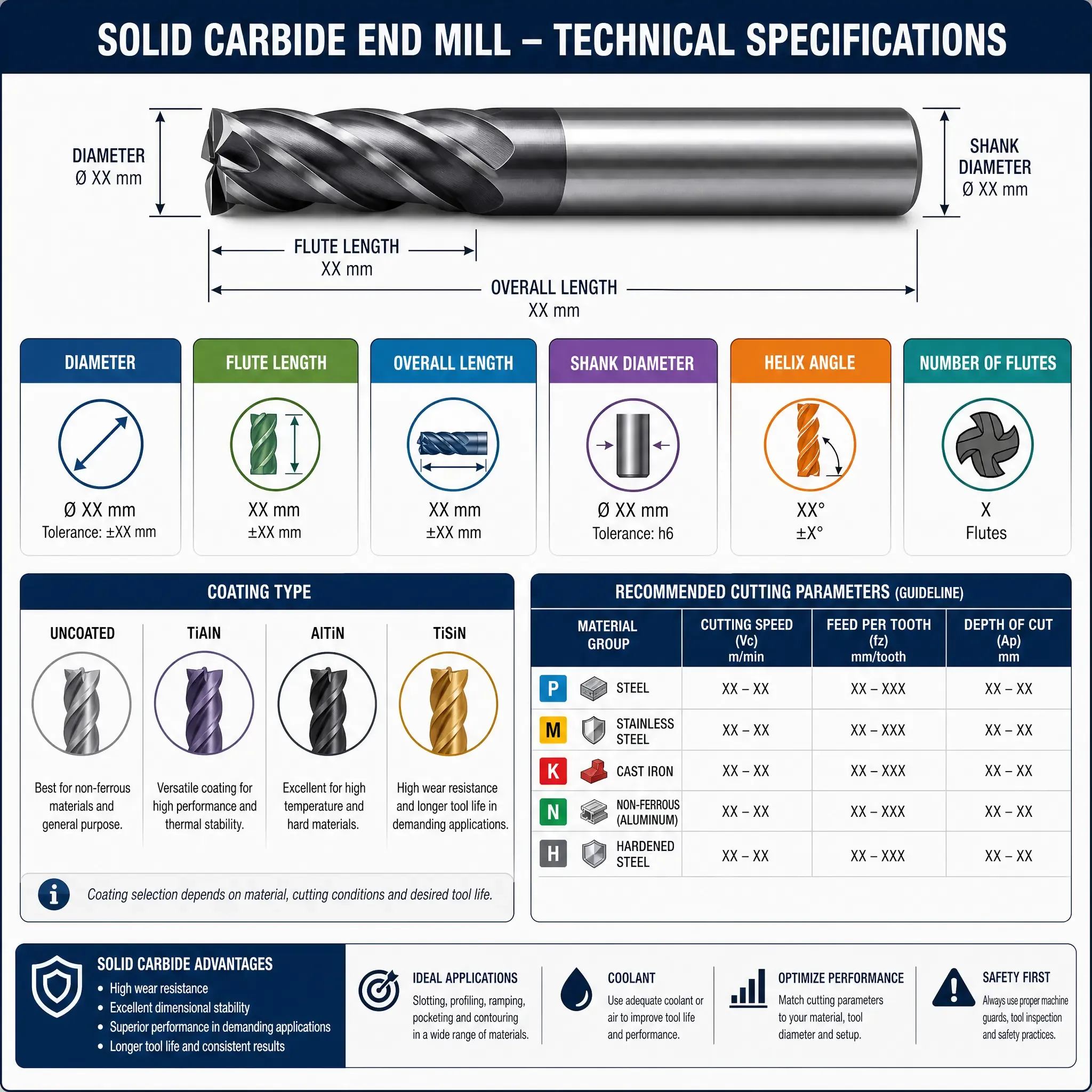
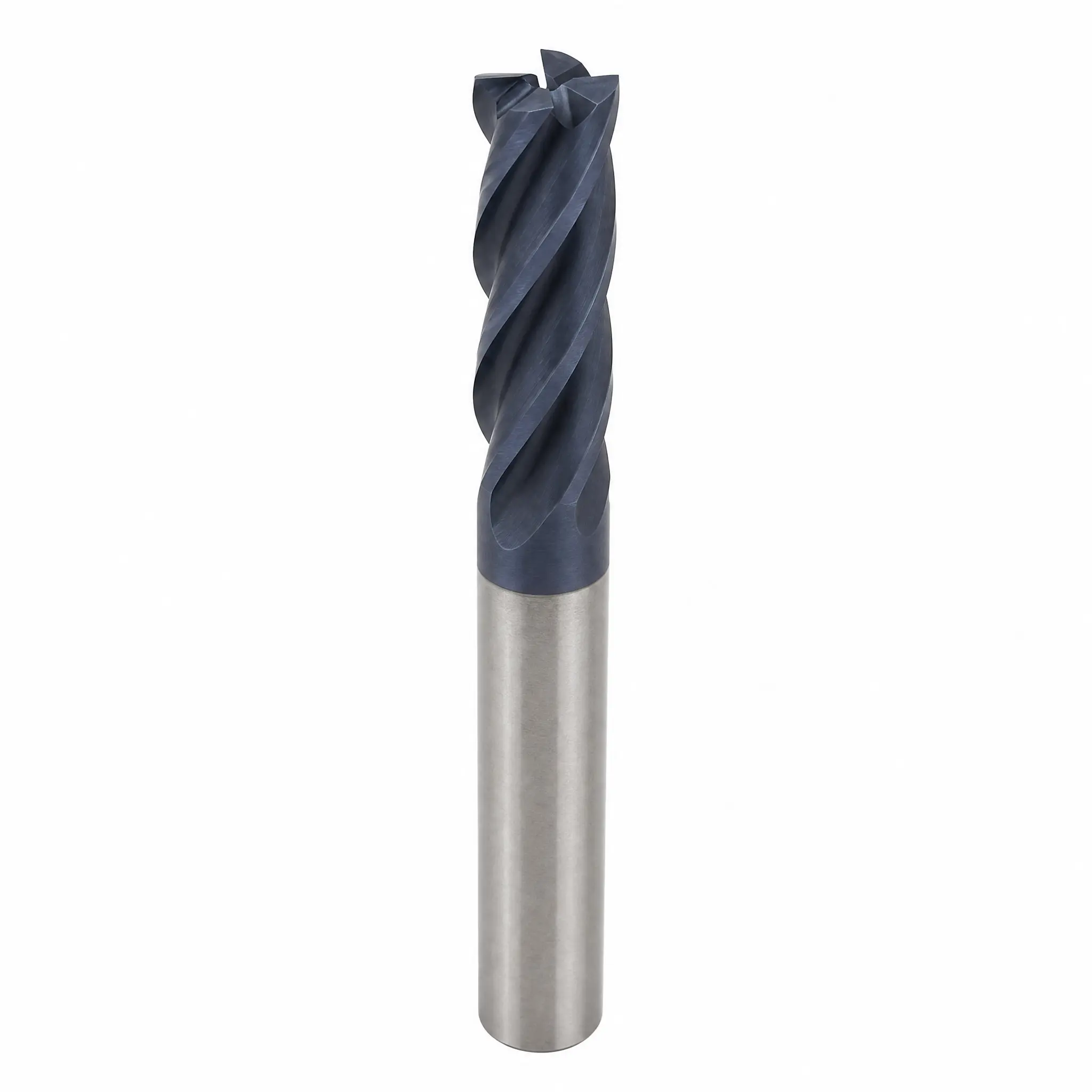
A carbide end mill is a rotary cutting tool made from tungsten carbide, a very hard and wear-resistant composite material, used in milling applications to remove material.[1] More importantly, thinking of it as a solution to a specific machining problem—rather than just an object with specs—is the key to making a smart purchasing decision. Its value is determined by how well it performs in your specific application, not by a generic definition.
Now that we have reframed the question away from a simple definition, we can focus on what really matters: the practical framework for choosing the right tool. Let's explore the questions that will empower you to cut through the noise and select a tool and a supplier that will truly benefit your bottom line.
Why Are Technical Specifications So Misleading?
Have you ever looked at a catalog and felt overwhelmed by the sheer number of options? Coatings, helix angles, flute counts—it's easy to assume that "more" or "newer" is always better. This assumption, however, can be a costly mistake in manufacturing.
Technical specifications are not a simple scorecard; they are a set of trade-offs.[2] The "best" feature for machining soft aluminum is often the worst possible choice for cutting hardened steel. A spec sheet is only meaningful when read in the context of a specific job.
Dive Deeper: Deconstructing the Spec Sheet
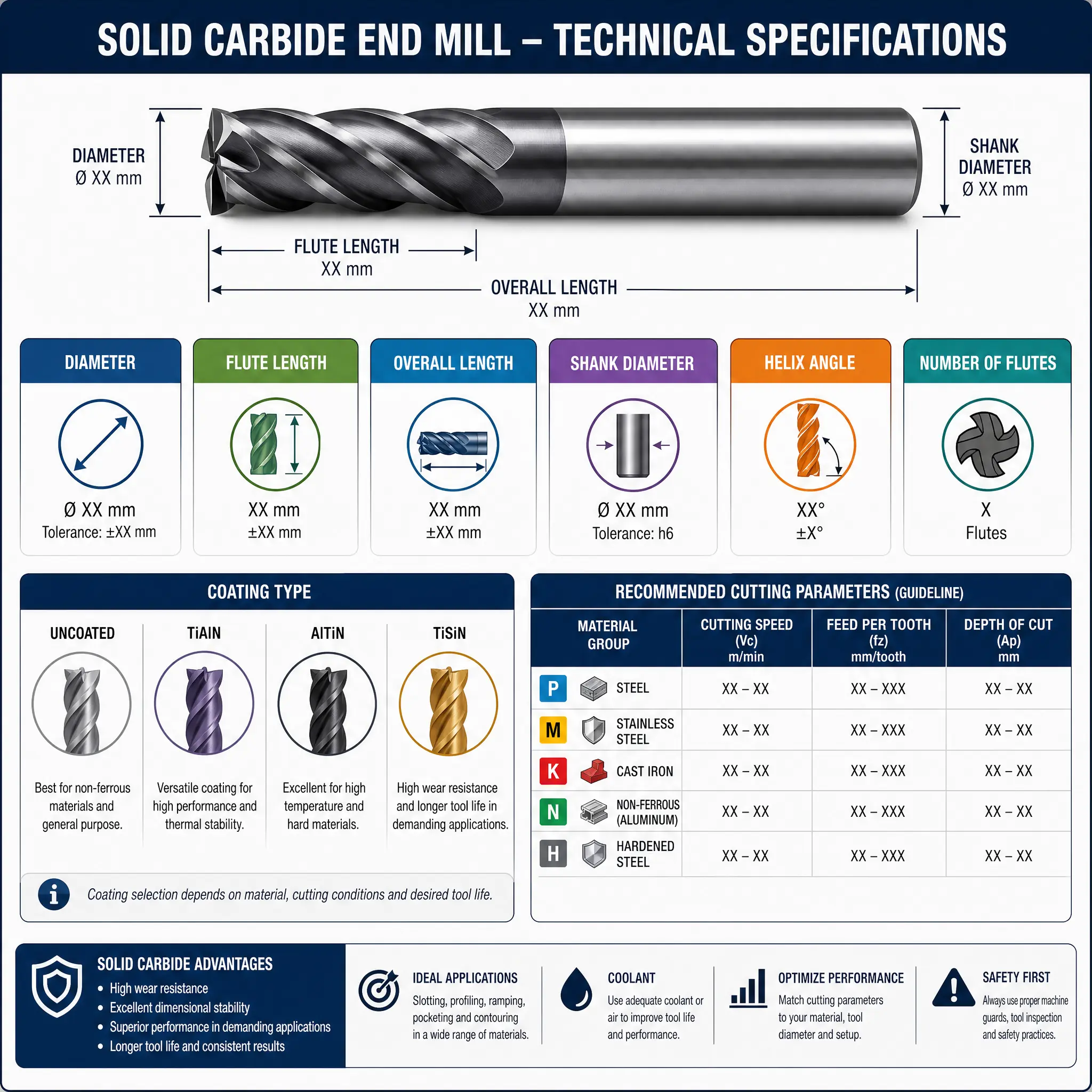
From my experience talking to hundreds of buyers, the most common mistake is focusing on specs in isolation. A procurement manager might see a new, advanced coating and assume it's universally superior, but that's rarely the case. Let's break down a few common specifications to see how they are actually a series of application-dependent choices.
H3: The Flute Count Fallacy
One of the first specs you'll see is the flute count. It's not as simple as more flutes being better. The number of flutes on a carbide end mill involves a critical trade-off between chip evacuation and surface finish.[3]
- Fewer Flutes (2-3): These end mills have larger "flute valleys," which are the channels that evacuate chips away from the cutting zone. This is essential when machining materials that produce large, gummy chips, like aluminum. Using a high-flute-count end mill in aluminum can lead to "chip packing," where the flutes clog, causing the tool to overheat and likely break.[4]
- More Flutes (4+): These end mills have more cutting edges engaged with the material at any given time. This results in smaller chips and a much better surface finish. They are ideal for harder materials like steel and stainless steel, which produce smaller, more manageable chips. The increased core strength of a multi-flute tool also makes it more rigid and stable when cutting tough alloys.[5]
Feature | 2-Flute End Mill | 4+ Flute End Mill |
|---|---|---|
Primary Use | Slotting, roughing | Finishing, profiling |
Ideal Materials | Aluminum, plastics, non-ferrous metals | Steels, stainless steels, titanium, hard alloys |
Chip Evacuation | Excellent | Good to Fair |
Surface Finish | Fair to Good | Excellent |
Core Strength | Lower | Higher |
H3: The Coating Conundrum
Coatings are micro-thin layers applied to the tool to enhance its performance, primarily by increasing hardness and providing lubricity to reduce friction.[6] But there is no single "best" coating.
- TiAlN (Titanium Aluminum Nitride): A great all-around performer for steels and stainless steels. The aluminum content creates a layer of aluminum oxide at high temperatures, which acts as a thermal barrier, protecting the carbide substrate.[7]
- AlTiN (Aluminum Titanium Nitride): Offers even better heat resistance than TiAlN, making it suitable for high-speed machining and cutting difficult materials like Inconel or hardened steels.[8]
- Uncoated: For some materials like soft plastics or certain composites, an uncoated but highly polished end mill is best to maintain a sharp edge and prevent material from melting or smearing.
When a customer asks me for our "toughest coating," I always respond by asking, "For what material?" Choosing the wrong one can be worse than using an uncoated tool.
What Questions Should You Ask a Carbide End Mill Supplier?
Are you tired of receiving generic sales pitches when you need specific, expert advice? The quality of the answers you get is directly related to the quality of the questions you ask. To get a valuable recommendation, you need to shift your approach from asking about products to describing your problems.
Instead of asking for the "best" or "strongest" tool, frame your inquiry around your application. Describe your material, machine, operation, and goals in detail. Then, ask the supplier for their recommendation and, most importantly, the reasoning behind it.

Dive Deeper: How to Frame Your Inquiry for Success
A good supplier wants to be your partner, not just a vendor. To enable them to help you, you need to provide the right information. Simply asking, "Do you have a 1/2 inch end mill?" is a recipe for getting a generic, all-purpose tool that is optimized for nothing.
H3: From "What's your best tool?" to "Here's my problem..."
When I work with a new customer at QT TOOLS, the most productive conversations start with them describing their challenge. To get the best recommendation from any supplier, prepare to share the following details:
- Material & Hardness: Be specific. Don't just say "steel"; say "4140 pre-hardened steel at 32 HRC" or "6061-T6 aluminum." The hardness and composition dictate everything from carbide grade to tool geometry.
- Machine & Setup: What machine are you using? Mention its horsepower, spindle RPM range, and overall rigidity. A heavy-duty, high-performance carbide end mill will chatter and fail on a light-duty machine.[10] Also, mention your workholding—is it secure?
- Operation Type: What are you trying to do?
- Slotting: Cutting a channel equal to the tool's diameter. This is a very demanding operation.
- Profiling: Machining around the outside of a part.
- Finishing: A light pass intended to produce a specific surface finish.
- Roughing: High-volume material removal where finish is not the priority.
- Desired Outcome: What does success look like? Are you aiming for the longest possible tool life, the fastest cycle time, or a mirror-like surface finish (measured in Ra)? These goals are often mutually exclusive, so defining your priority is critical.[11]
H3: Example Questions to Vet a Supplier's Expertise
Once you've provided the context, use these questions to gauge whether the supplier is a true expert or just a salesperson:
- "Based on my application details, which specific end mill from your line do you recommend, and what is the technical reasoning for that choice?" A good answer will reference the geometry, coating, and carbide grade in relation to your material and operation. A poor answer is, "This is our most popular one."
- "What starting feeds and speeds do you suggest for this tool in my material, and how should I adjust them based on what I see?" An expert partner will provide a starting point and explain what to look for (e.g., "If you see chatter, reduce your radial depth of cut. If the chips are turning blue, you might be running too fast.").
- "What are the typical failure modes for this tool in this application, and what can I do to prevent them?" This question reveals deep experience. A trustworthy supplier will be honest about a tool's limitations and will proactively help you avoid common pitfalls like chipping, rapid wear, or breakage.
Asking these questions transforms the conversation from a transaction into a consultation.
What Questions Should a Good Carbide End Mill Supplier Ask You?
Have you ever contacted a supplier for a recommendation, only to have them immediately suggest a product without asking a single question? This is a major red flag. The credibility of a supplier is revealed far more by the questions they ask than by the statements they make.
A credible supplier acts like a consultant. Before they ever recommend a specific carbide end mill, they will ask you a series of diagnostic questions about your process. If they don't, they are selling a commodity, not a performance solution.
Dive Deeper: The Supplier as a Partner
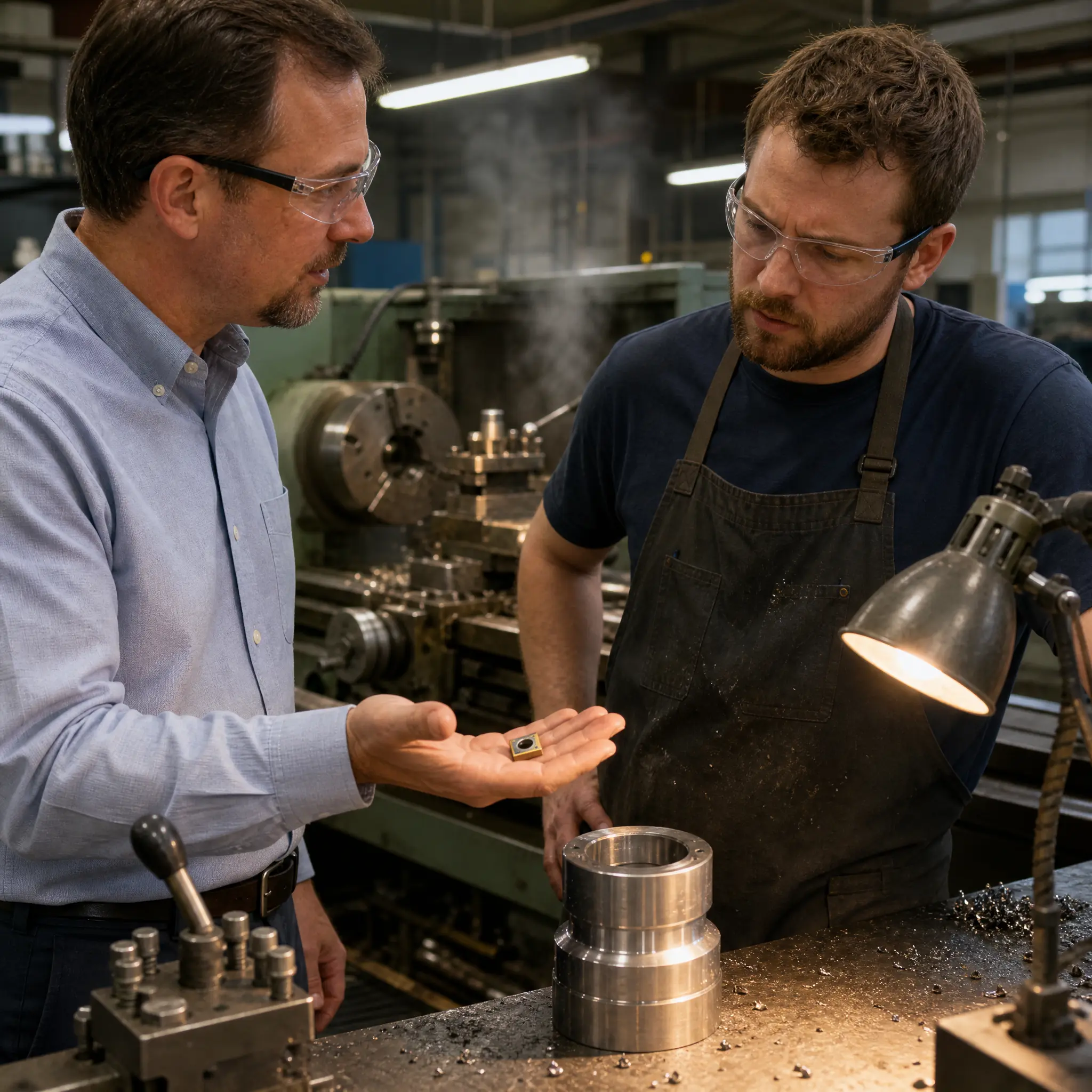
When a potential customer reaches out to us, my first goal isn't to sell a tool; it's to understand their process. A carbide end mill is just one component in a complex manufacturing system that includes the material, the machine, the programmer, and the operator. Recommending a tool without understanding that system is irresponsible.
A supplier who invests time in asking questions is investing in your success. They know that if the tool they recommend performs well, you will come back. If it fails because they didn't do their homework, they've lost a customer forever.
H3: The Diagnostic Approach is a Sign of Expertise
Think of it like visiting a doctor. You wouldn't trust a doctor who prescribed medication without first asking about your symptoms, lifestyle, and medical history. Similarly, a tooling expert needs to diagnose your machining application before prescribing a tool.
Here are the questions I always ask, and the ones you should expect from any reputable supplier:
- "Can you tell me about the material you're cutting? What's the specific grade and its condition?"
- "What kind of CNC machine are you running? Is it a VMC, HMC, or a lighter-duty router?"
- "What kind of tool holder are you using? (e.g., collet chuck, hydraulic, shrink-fit)" - This indicates how much runout they might have.
- "Are you roughing or finishing? What is the target surface finish you need to achieve?"
- "What is your main priority for this operation: speed, tool life, or surface quality?"
This dialogue isn't a sales tactic; it's a necessary part of the engineering process to ensure you get a tool that is perfectly matched to your needs.
H3: Red Flags: When Silence is Not Golden
If a supplier is quick to give you a part number but slow to ask questions, it's a clear warning sign. Their silence on key topics indicates a lack of expertise or a lack of interest in your success.
If they don't ask about your material, they can't recommend the right geometry or coating.
If they don't ask about your machine, they can't know if the tool they recommend will be stable or effective.
If they don't ask about your goals, they are just guessing at what "performance" means to you.
The right supplier relationship is a partnership. They should be just as invested in your successful outcome as you are.
Frequently Asked Questions
How does carbide grade affect end mill performance?
Carbide grade refers to the specific recipe of tungsten carbide powder and a cobalt binder.[12] Grades with more cobalt are tougher and more resistant to chipping, making them good for interrupted cuts. Grades with less cobalt are harder and more wear-resistant, ideal for finishing operations in abrasive materials. You should rely on your supplier's recommendation based on your application.
Is a more expensive carbide end mill always better?
Not necessarily. The value of an end mill is measured by its cost-per-part, not its initial purchase price. An expensive, high-performance tool might be a waste of money if used in the wrong application. The "best" tool is the one that is properly optimized for your specific job, providing a balance of performance and tool life that lowers your overall production cost.
How important is tool coating for a carbide end mill?
A coating is critically important for most metal-cutting applications. It provides a thermal barrier to protect the tool from heat, increases surface hardness for better wear resistance, and adds lubricity to prevent chip welding. However, the right coating is entirely dependent on the material being machined. Using the wrong coating can be worse than using no coating at all.
What's the difference between a general-purpose and a high-performance end mill?
A general-purpose end mill is designed to be a "jack of all trades, master of none." It offers acceptable performance across a wide range of materials but is rarely the optimal choice. A high-performance end mill is engineered with specific geometry, carbide grade, and coating for a narrow range of materials or a single application, delivering superior tool life, speed, and finish when used correctly.
Conclusion
The journey to finding the right carbide end mill begins by asking the right questions. Instead of getting lost in the definition of the tool, focus on the process of selecting it. Reframe your thinking from "What is it?" to "How do I choose the best one for my job?" Remember that technical specifications are contextual trade-offs, not a simple scorecard. More importantly, use your interactions with suppliers as a test of their expertise. The quality of the questions they ask you is the clearest indicator of whether they will be a true partner or just another vendor.
At QT TOOLS, we believe our job is to provide solutions, not just sell products. If you're looking for a partner who will take the time to understand your challenges and recommend a carbide end mill that will genuinely improve your efficiency and bottom line, we invite you to reach out. We are committed to helping you succeed.
1
"End mill - Wikipedia", https://en.wikipedia.org/wiki/End_mill. The cited reference defines end mills as rotary cutters used in milling and describes cemented tungsten carbide as a hard, wear-resistant material commonly used for cutting tools. Evidence role: definition; source type: encyclopedia. Supports: A neutral reference should define end mills as rotary milling cutters and describe cemented tungsten carbide as a hard, wear-resistant cutting-tool material..
2
"Effect of Edge Geometry and Process Parameters - PMC - NIH", https://pmc.ncbi.nlm.nih.gov/articles/PMC12388005/. The cited machining reference explains that cutting-tool geometry and surface treatments are selected in relation to workpiece material, operation, and cutting conditions, supporting the characterization of specifications as application-dependent trade-offs. Evidence role: general_support; source type: education. Supports: An educational machining source should explain that cutter geometry, coating, and other specifications must be matched to workpiece material and operation rather than ranked generically.. Scope note: This supports the general principle rather than proving every specific trade-off listed in the article.
3
"Why Flute Count Matters - In The Loupe - Machinist Blog", https://www.harveyperformance.com/in-the-loupe/flute-count-matters/. The cited machining source describes flute count as influencing chip space and cutting-edge engagement, which in turn affects chip evacuation and achievable surface finish. Evidence role: mechanism; source type: education. Supports: A source should explain how fewer flutes provide larger chip gullets for evacuation while more cutting edges can improve finish under appropriate cutting conditions..
4
"What causes chip buildup in 1/2 endmills during aluminum ...", https://www.facebook.com/groups/769782850345135/posts/1736435720346505/. The cited study discusses how inadequate chip evacuation and adhesion during aluminum milling can increase cutting temperature and accelerate tool wear or failure. Evidence role: mechanism; source type: paper. Supports: A research or technical source should connect aluminum's chip behavior and adhesion tendencies with flute clogging, heat generation, and tool failure risk in milling.. Scope note: The source may address aluminum milling mechanisms broadly rather than the exact phrase 'high-flute-count end mill.'
5
"Chatter Stability of Machining Operations", https://academy.cba.mit.edu/classes/computer_machining/chatter.pdf. The cited machining-dynamics source relates end mill geometry, including core diameter and flute design, to tool stiffness and cutting stability. Evidence role: mechanism; source type: paper. Supports: A source should explain that increasing flute count often increases the tool core area and stiffness, affecting stability and chatter resistance.. Scope note: The source may establish the stiffness relationship without evaluating every tough alloy named in the article.
6
"Characterization and Evaluation of Engineered Coating ... - PMC", https://pmc.ncbi.nlm.nih.gov/articles/PMC9415707/. The cited review describes hard coatings for cutting tools as thin surface layers that can raise surface hardness and reduce friction or adhesion, thereby improving wear performance. Evidence role: mechanism; source type: paper. Supports: A review paper should support that PVD/CVD hard coatings on cutting tools improve wear resistance through higher hardness and reduced friction or adhesion..
7
"Titanium aluminium nitride", https://en.wikipedia.org/wiki/Titanium_aluminium_nitride. The cited materials study reports that TiAlN coatings can form a protective alumina-rich oxide layer during high-temperature exposure, helping to limit heat and oxidation damage to the underlying tool material. Evidence role: mechanism; source type: paper. Supports: A materials paper should document oxidation of TiAlN coatings and formation of a protective alumina-rich layer at elevated temperatures..
8
"The Influence of nc-AlCrTiN/α-BN Coatings on Increasing the ...", https://pmc.ncbi.nlm.nih.gov/articles/PMC11174048/. The cited study compares Ti-Al-N coating compositions and reports that aluminum-rich variants can show improved high-temperature oxidation resistance and machining performance in heat-intensive cutting applications. Evidence role: general_support; source type: paper. Supports: A source should compare Al-rich Ti-Al-N coatings with TiAlN coatings for oxidation resistance, hot hardness, or performance in high-temperature machining.. Scope note: The evidence may support composition-dependent trends rather than a universal ranking of every commercial AlTiN coating over every TiAlN coating.
9
"Cutting Performance of Different Coated Micro End Mills in ...", https://pmc.ncbi.nlm.nih.gov/articles/PMC6267563/. The cited tribology or machining study reports that zirconium nitride coatings can reduce friction and aluminum adhesion, supporting their use where built-up edge or galling is a concern. Evidence role: mechanism; source type: paper. Supports: A source should show that ZrN coatings can reduce friction and aluminum adhesion or built-up edge in machining aluminum alloys..
10
"An Investigation of Cutting Tool Chatter Vibration in Machine ...", https://scholarworks.uni.edu/cgi/viewcontent.cgi?article=4664&context=grp. The cited machining-dynamics source identifies low structural stiffness in the machine-tool-workpiece system as a contributor to chatter, which can degrade surface quality and shorten tool life. Evidence role: mechanism; source type: paper. Supports: A source should explain that machine-tool and setup stiffness influence milling chatter and that chatter can reduce tool life or lead to breakage.. Scope note: The source supports the mechanism generally; actual failure depends on cutting parameters, holder, workholding, and tool geometry.
11
"Optimization techniques for energy efficiency in machining ...", https://pmc.ncbi.nlm.nih.gov/articles/PMC9894528/. The cited machining-optimization study treats tool life, production rate or material removal, and surface roughness as simultaneous objectives that can require trade-offs when selecting cutting parameters. Evidence role: general_support; source type: paper. Supports: A machining optimization study should show that cutting parameters are commonly optimized across competing outcomes such as tool life, material removal rate, cycle time, and surface roughness..
12
"Topology of WC/Co Interfaces in Cemented Carbides - PMC", https://pmc.ncbi.nlm.nih.gov/articles/PMC10456510/. The cited materials reference defines cemented carbide as a composite of hard tungsten carbide particles held in a metallic binder phase, most commonly cobalt. Evidence role: definition; source type: encyclopedia. Supports: A reference should define cemented carbides as tungsten carbide particles bound by a metallic binder, commonly cobalt..