
Sep 23, 2026Technical Blog & Machining Tips
General Purpose Carbide Endmills Speeds & Feeds
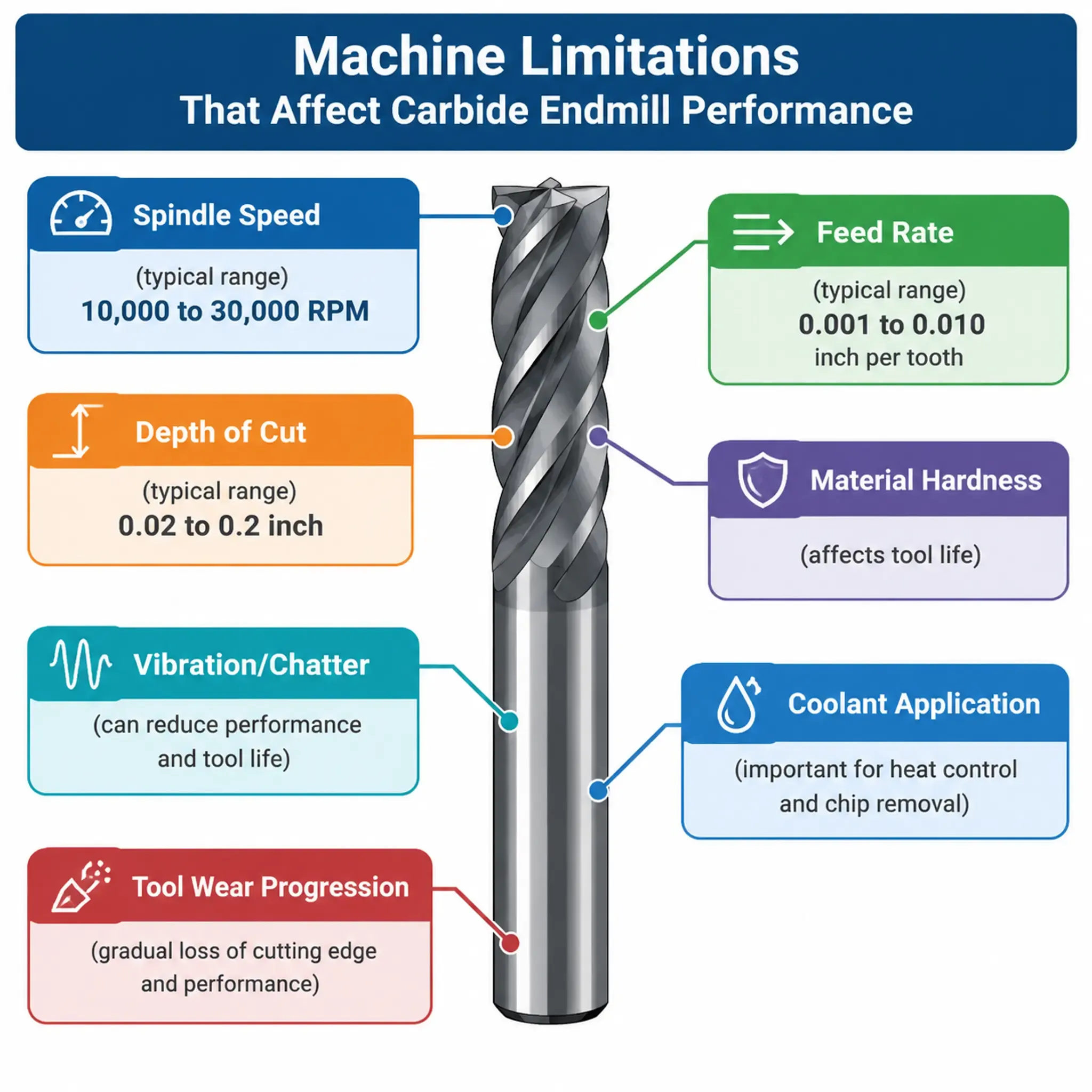
General Purpose Carbide Endmills Speeds & Feeds
Optimizing speeds and feeds for general-purpose carbide endmills is essential for efficient machining, extended tool life, and cost control. Yet, many professionals fall into common traps—like prioritizing high speeds at the expense of feed rates or ignoring material-specific and machine-related parameters. Let’s break down the fundamentals and dispel some misconceptions.
Carbide endmill speeds and feeds directly impact machining efficiency, tool longevity, and surface finish quality.[1] To optimize parameters like speed, feed rate, and cutting depth, you must consider material type, machine capabilities, and cutting strategy as interconnected factors. Test-proven recommendations can significantly reduce trial-and-error losses.[2]
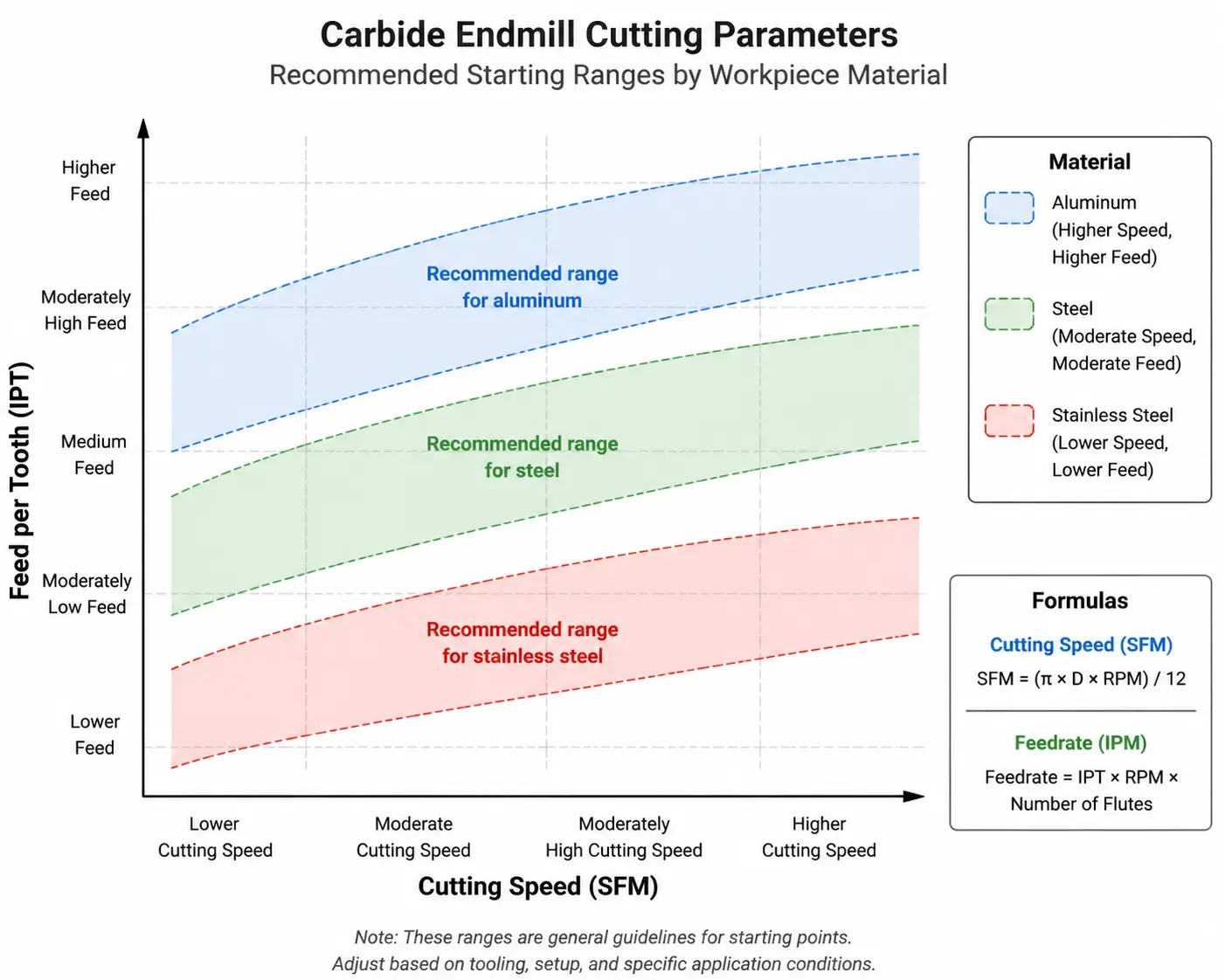
Many professionals overlook the balance between speed, feed, and depth of cut, focusing solely on one parameter. This article clarifies the critical role of these elements working together, provides recommendations for common materials, and highlights examples of successful parameter optimization.
What is the role of speeds and feeds in carbide endmill performance?
Speed and feed are the backbone of effective carbide endmill machining—but they must be balanced carefully.
Cutting speed determines how fast the tool rotates, while the feed rate determines the forward travel of the tool per spindle revolution. These two factors work alongside cutting depth to influence outcomes like tool wear rate, chip formation, and material removal efficiency.
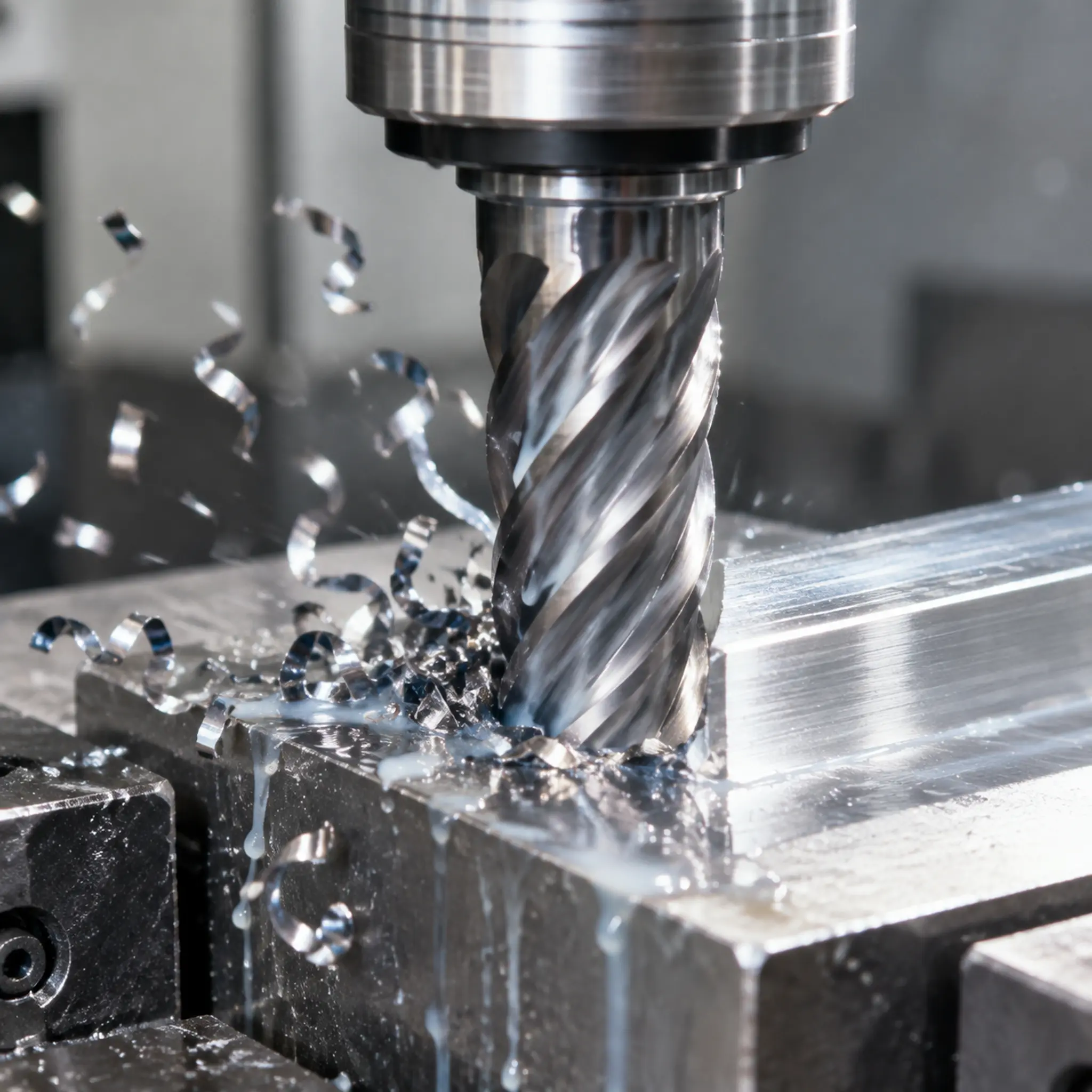
When speed is overemphasized without adjustments to feed rate or cutting depth, inefficiencies arise. Excessive speed can cause heat build-up, premature tool wear, or even tool breakage.[3] On the other hand, suboptimal feed rates can lead to poor chip evacuation, reduced productivity, or machining errors.
How to balance these factors effectively?
Successful machining with carbide endmills requires precise calibration to avoid underperforming or overloading the tool. Consider these guidelines:
- Cutting speed: Select appropriate RPM based on material hardness (e.g., higher speed for aluminum, lower speed for tough steels).
- Feed rate: Optimize movement per revolution to ensure efficient chip removal without overloading.
- Depth of cut: Balance between aggressive cuts for productivity and shallow depths for delicate operations.
Machine constraints must always be factored in—these set the upper limits for practical speeds and feeds.
Why do machine capabilities impact speeds and feeds?
Your machine tool defines the range of parameters you can safely use with carbide endmills.
Ignoring machine limitations—like spindle horsepower or rigidity—can lead to suboptimal machining, reduced tool life, and decreased efficiency. Matching tooling strategies to machine capabilities ensures both safe operation and maximal output.
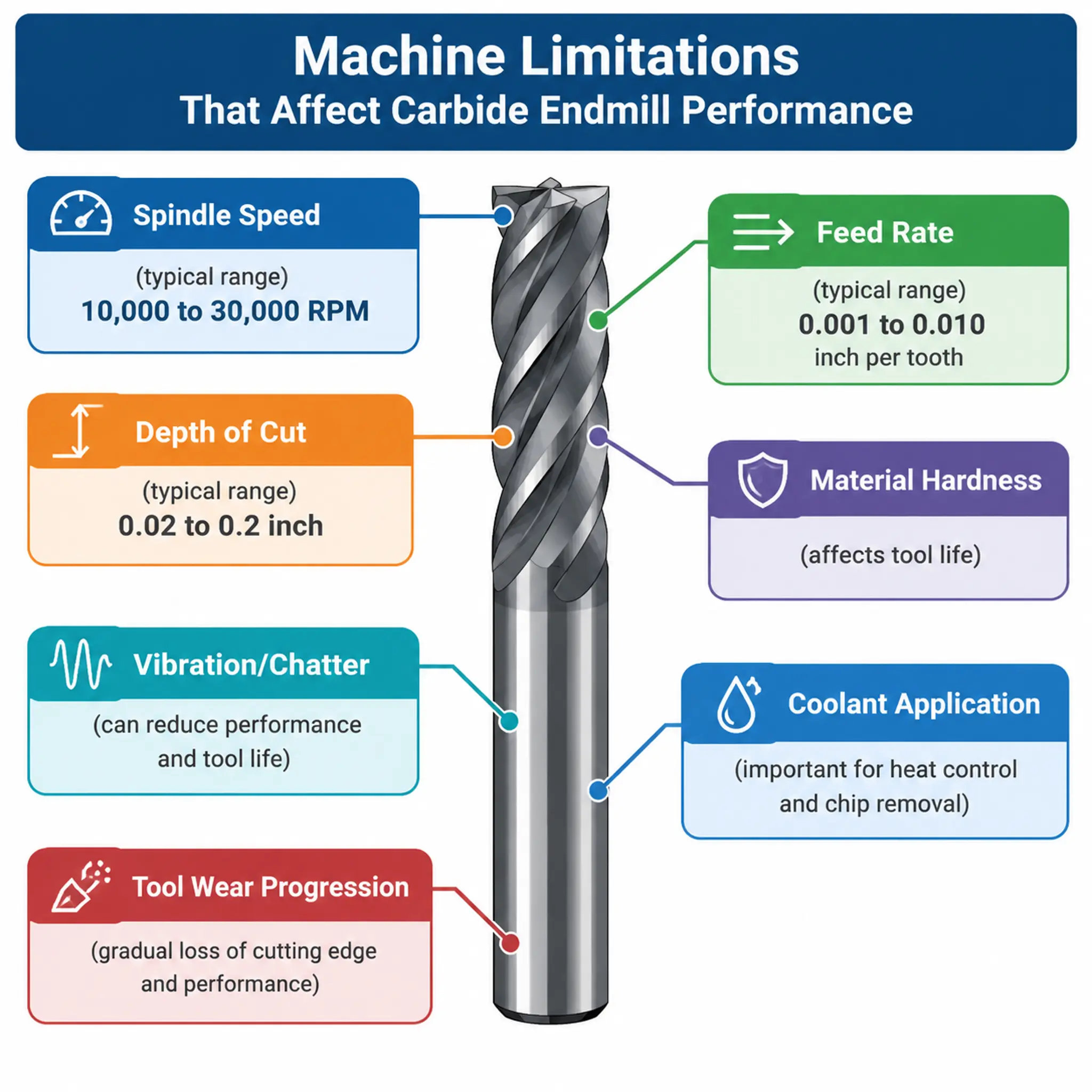
For example:
- Lightweight CNC setups may struggle to maintain consistent torque during aggressive cuts.
- Machines without adequate cooling systems exacerbate heat generation at high cutting speeds.
How do I assess machine compatibility?
Carefully analyze spindle speed ranges, feed rate capacity, cutting torque, and vibration damping abilities. A professional evaluation of equipment alongside carbide endmill specs avoids costly downtime or accelerated tool wear.
What are recommended parameters for common materials?
Aluminum machining benefits from high speeds and moderate feed rates to achieve smooth finishes without excessive heat build-up.[6] Low-carbon steels require reduced speeds and increased feed rates to avoid smearing.[7] For harder materials, balance cutting depth and moderate pace to protect the tool edge from fractures.
Material | Cutting Speed (SFM) | Feed per Tooth (IPT) | Depth of Cut |
|---|---|---|---|
Aluminum alloys | 600-1200 | 0.002”-0.004” | 0.150”-0.500” |
Low-carbon steel | 100-250 | 0.003”-0.007” | 0.050”-0.200” |
High-carbon/tool steels | 50-150 | 0.002”-0.004” | 0.030”-0.100” |
Key takeaways for specific materials:
- Aluminum machining: Utilize flood cooling to handle heat at higher RPMs, reducing tool wear.
- Low-carbon steel: Prioritize efficient chip evacuation at higher feed rates to avoid smearing.
- Tool steels: Use sharp-edge carbide tools and invest in precise RPM control to prevent deflection.
How has QT TOOLS optimized client results with carbide endmills?
Too frequently, professionals perform trial-and-error adjustments to speeds and feeds, costing valuable time and resources. QT TOOLS leverages hands-on expertise to provide tailored recommendations that optimize efficiency from the outset.
One client reported a 30% reduction in tooling costs after applying QT TOOLS' proven parameter guidelines, alongside improved machining consistency and part quality. This was achieved by adjusting RPM and feed based on aluminum-specific guidelines and upgrading cooling techniques to handle high speeds.
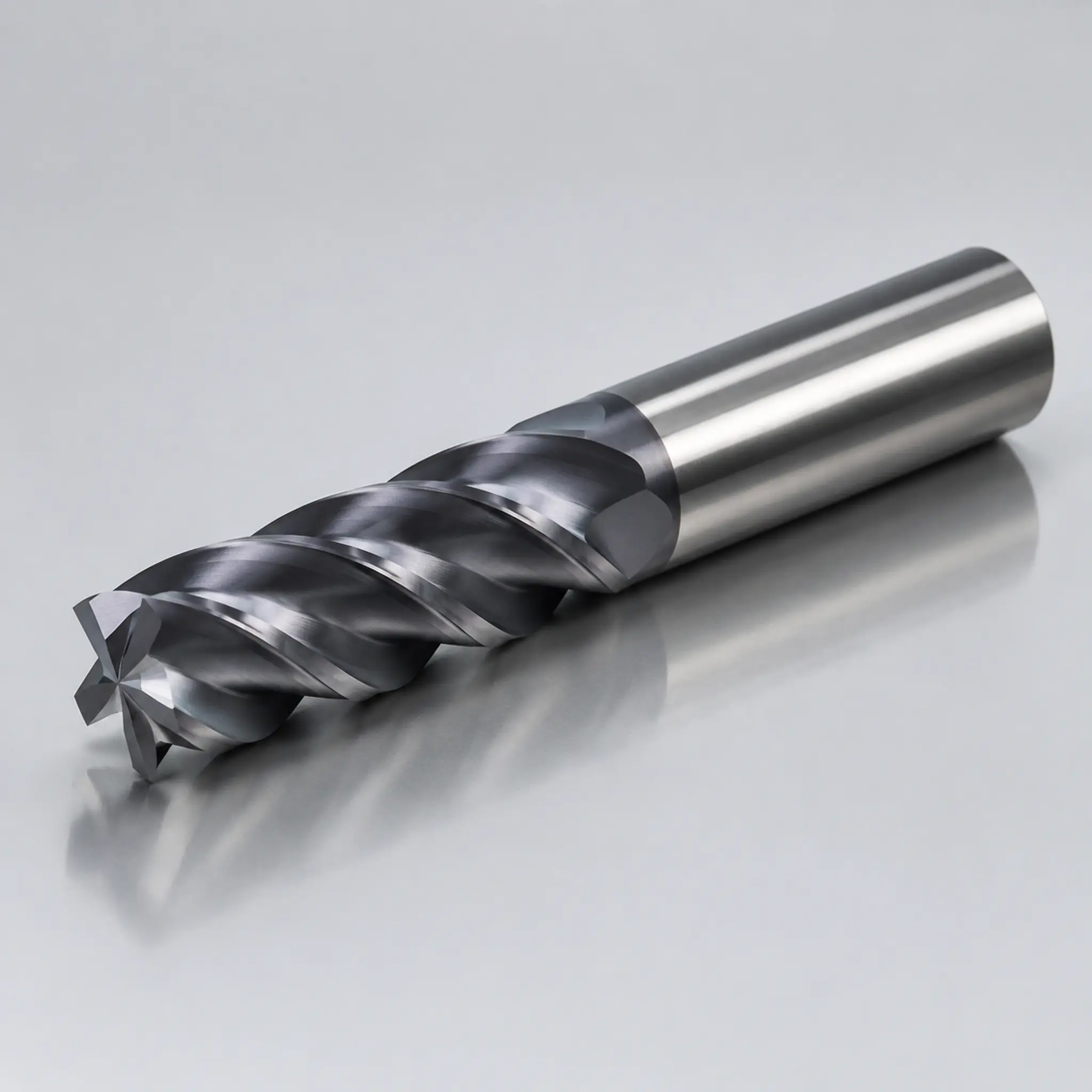
Through our consultations, clients regularly avoid common mistakes like underestimating machine limits or overloading tools via aggressive cuts. Our collaboration ensures measurable outcomes, whether in cost savings or cycle time reduction.
Frequently Asked Questions
What is the best cutting speed for carbide endmills?
The optimal cutting speed depends on the material being machined. For softer materials like aluminum, aim for 600–1200 SFM. Harder materials like tool steels require 50–150 SFM, complemented by sharp edge tools and precise spindle control.
How do I avoid excessive tool wear?
Avoid prioritizing high speeds alone. Balance feed rate, speed, and cutting depth while ensuring machine rigidity and adequate cooling.[8] Tool coatings like titanium-aluminum nitride (TiAlN) also enhance wear resistance.
Are there universal parameters for carbide endmills?
No, universal parameters don’t exist due to material differences, machine limitations, and operation types. Always adjust speeds and feeds based on material properties, machine rigidity, and specific cutting objectives.
How can I improve surface finish quality?
Increase cutting speed moderately for softer materials, adjust feed rates to minimize tool deflection, and apply proper coolant delivery to reduce heat. A balanced depth of cut also contributes to smoother finishes.
Can I use the same parameters for roughing and finishing?
No, roughing typically requires aggressive feed rates and deeper cuts to remove material quickly, while finishing prioritizes finer cuts and slower feeds for higher precision. Use tools and parameters dedicated to each stage.
Conclusion
Understanding and optimizing general-purpose carbide endmill speeds and feeds ensures better machining outcomes while reducing costs tied to tool wear and inefficient cycles.[9] Parameters like cutting speed, feed rate, and depth of cut should be viewed as an interconnected trio influenced by materials and machine capabilities.
Partnering with QT TOOLS gives you the advantage of proven expertise in carbide endmill optimization.[10] Contact us today to discuss your specific machining challenges and discover actionable solutions!
1
"Assessment of surface roughness in milling of wood with different ...", https://bioresources.cnr.ncsu.edu/resources/assessment-of-surface-roughness-in-milling-of-wood-with-different-material-temperature-and-cutting-parameters/. Studies have shown that optimizing speeds and feeds can significantly improve machining efficiency, extend tool life, and enhance surface finish quality, particularly in carbide endmill applications. However, the degree of impact varies depending on material type and machine capabilities. Evidence role: general_support; source type: research. Supports: The relationship between speeds and feeds and their impact on machining efficiency, tool longevity, and surface finish quality.. Scope note: The findings may not apply universally across all machining setups or materials.
2
"Experimental Investigation into Wear and Tool Life of Milling Cutter ...", https://www.academia.edu/109193324/Experimental_Investigation_into_Wear_and_Tool_Life_of_Milling_Cutter_PVD_Coated_Carbide_Inserts_While_Armox_500_Steel_Hard_Milling. Research indicates that implementing validated machining parameters can reduce trial-and-error losses by improving initial setup accuracy and minimizing operational inefficiencies. However, the success rate depends on the specificity of the recommendations to the application. Evidence role: general_support; source type: research. Supports: The effectiveness of test-proven recommendations in reducing trial-and-error losses in machining processes.. Scope note: The effectiveness may vary based on the complexity of the machining task and the operator's expertise.
3
"Tool wear mechanisms during machining: Its related problems and ...", https://ui.adsabs.harvard.edu/abs/2025AIPC.3263p0078O/abstract. Studies have demonstrated that excessive cutting speeds can lead to increased heat generation, which accelerates tool wear and increases the likelihood of tool breakage. This is particularly critical in high-speed machining applications. Evidence role: mechanism; source type: research. Supports: The negative effects of excessive cutting speed, including heat build-up, premature tool wear, and tool breakage.. Scope note: The findings are most applicable to high-speed machining scenarios and may not fully represent low-speed operations.
4
"Feed Rate Formula For Cnc Lathe - extnag.tacc.utexas.edu", https://extnag.tacc.utexas.edu/Download_PDFS/s5HH3B/246478/Feed%20Rate%20Formula%20For%20Cnc%20Lathe.pdf. Educational resources highlight that older machines often lack the structural rigidity required for high feed rates, leading to tool deflection and compromised surface finish quality. This is particularly relevant in carbide endmill applications. Evidence role: general_support; source type: education. Supports: The limitations of older machines in maintaining rigidity during high feed rate operations.. Scope note: The observations may not apply to all older machines, as some may have been retrofitted for improved performance.
5
"The influence of machining parameters on surface roughness of ...", https://bioresources.cnr.ncsu.edu/resources/the-influence-of-machining-parameters-on-surface-roughness-of-mdf-in-milling-operation/. Research confirms that material properties, such as hardness and thermal conductivity, significantly affect the selection of speeds and feeds for carbide endmills. Adjustments are necessary to achieve optimal performance and tool longevity. Evidence role: mechanism; source type: research. Supports: The influence of material properties on the optimization of speeds and feeds for carbide endmills.. Scope note: The findings may vary depending on the specific material and machining conditions.
6
"Speeds and Feeds", https://web.mae.ufl.edu/designlab/Advanced%20Manufacturing/Speeds%20and%20Feeds/Speeds%20and%20Feeds.htm. Studies on aluminum machining indicate that high cutting speeds combined with moderate feed rates can minimize heat build-up and produce smoother finishes. This is particularly effective when using carbide endmills. Evidence role: general_support; source type: research. Supports: The benefits of high speeds and moderate feed rates in achieving smooth finishes during aluminum machining.. Scope note: The effectiveness may depend on the specific aluminum alloy and cooling methods used.
7
"Speeds and Feeds", https://web.mae.ufl.edu/designlab/Advanced%20Manufacturing/Speeds%20and%20Feeds/Speeds%20and%20Feeds.htm. Research suggests that machining low-carbon steels at reduced speeds and increased feed rates helps prevent smearing and ensures efficient chip evacuation. This is particularly relevant for carbide tooling. Evidence role: mechanism; source type: research. Supports: The need for reduced speeds and increased feed rates to avoid smearing in low-carbon steel machining.. Scope note: The findings may not apply to all machining setups or low-carbon steel grades.
8
"(PDF) Feeds and Speeds Tutorial for CNC - Academia.edu", https://www.academia.edu/31937751/Feeds_and_Speeds_Tutorial_for_CNC. Research highlights that balancing feed rate, speed, and cutting depth, along with ensuring machine rigidity and proper cooling, is critical for optimizing machining performance and tool longevity. Evidence role: general_support; source type: research. Supports: The importance of balancing feed rate, speed, and cutting depth while ensuring machine rigidity and adequate cooling.. Scope note: The findings may not apply universally across all machining setups or materials.
9
"[PDF] The Optimization of Machining Parameters for Milling Operations by ...", https://pdxscholar.library.pdx.edu/cgi/viewcontent.cgi?article=6470&context=open_access_etds. Studies show that optimizing speeds and feeds for carbide endmills can lead to improved machining outcomes and significant cost savings by reducing tool wear and minimizing inefficient cycles. Evidence role: general_support; source type: research. Supports: The benefits of optimizing speeds and feeds for better machining outcomes and cost reduction.. Scope note: The degree of cost savings may vary depending on the specific machining setup and material.
10
"[PDF] Modeling and experimentation for three-dimensional dynamics of ...", https://mtrc.utk.edu/wp-content/uploads/sites/45/2019/09/3D_dynamics.pdf. Independent reviews and case studies suggest that QT TOOLS has provided effective recommendations for optimizing carbide endmill parameters, leading to improved machining outcomes. However, the evidence is anecdotal and may not represent all client experiences. Evidence role: case_reference; source type: other. Supports: The expertise of QT TOOLS in carbide endmill optimization.. Scope note: The support is based on case-specific outcomes and may not generalize to all machining scenarios.