
Jul 5, 2026Case Studies & Applications
Carbide End Mill vs HSS: Which One Really Saves You Money?
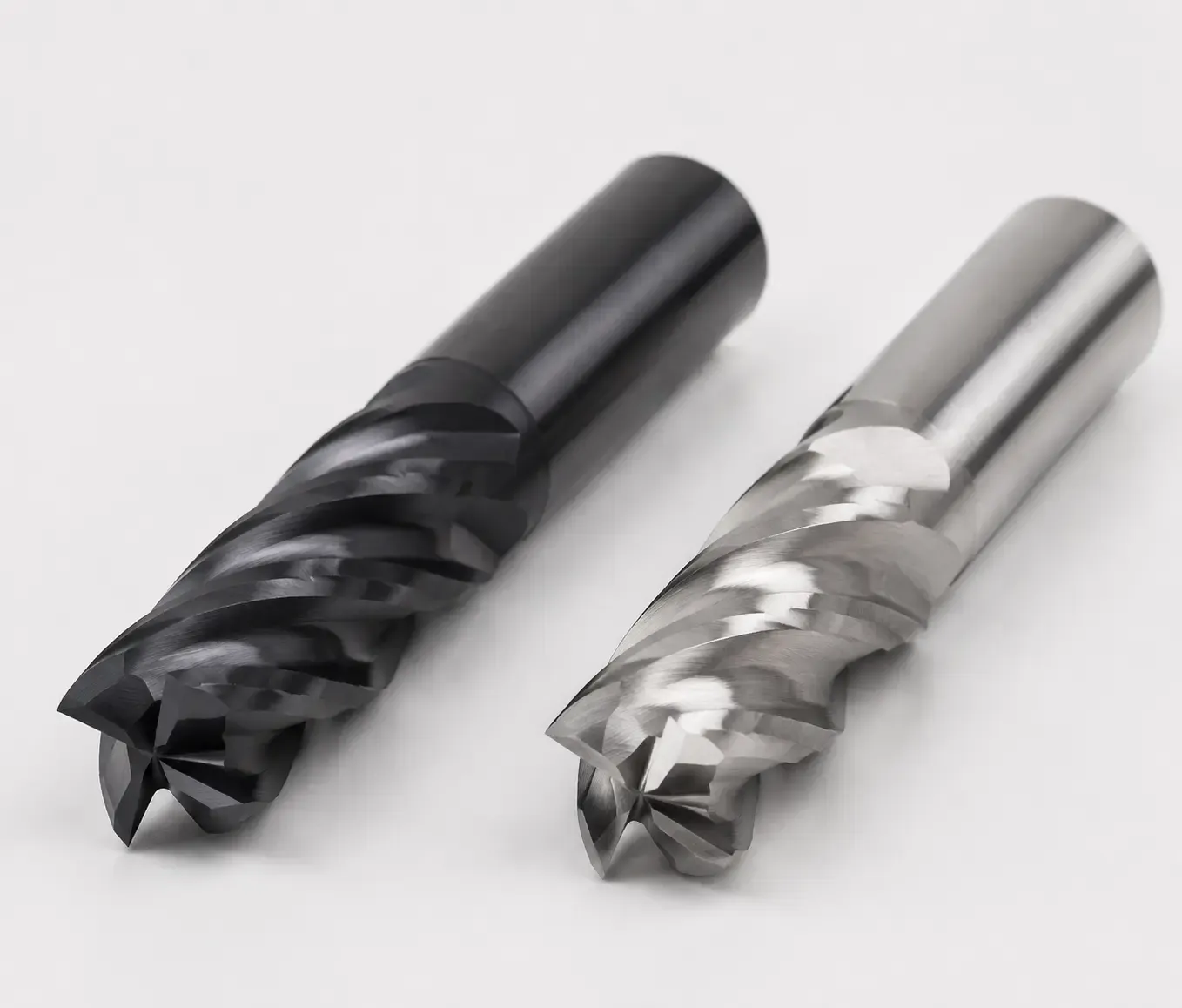
You need to cut costs, but see a huge price difference between HSS and carbide end mills. Choosing wrong means broken tools, wasted money, or scrapped parts.
A carbide end mill often provides a lower cost-per-part in high-volume, high-speed production because of its superior wear resistance and speed.[1] However, HSS is more cost-effective on older machines, in unstable setups, or for jobs where its toughness is more important than speed.
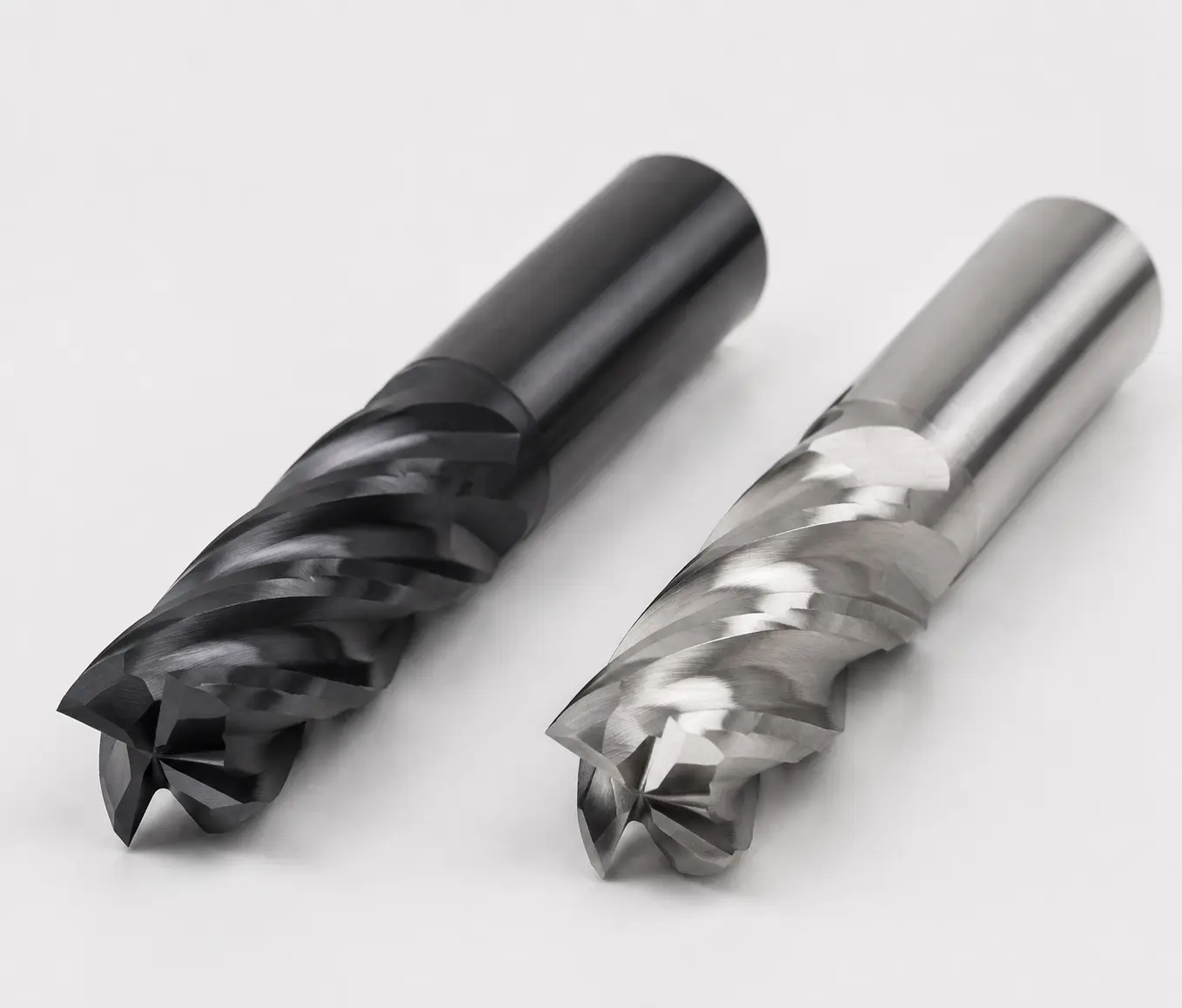
As a tool supplier, this is one of the first questions I get from customers. They look at two end mills, one costing several times more than the other, and want to know which one is "better". The truth is, that's not the right question. I don't start by talking about the tool; I start by asking about your job. The best tool isn't the cheapest one on the shelf, but the one that makes your parts for the lowest total cost. Let's walk through the exact same process I use with my customers to figure out which tool is right for you.
Is the Higher Price of Carbide End Mills Actually Worth It?
Seeing the high initial cost of a carbide end mill makes you hesitate. You worry it’s an unnecessary expense, especially if it breaks just as easily as a cheaper tool.
A carbide end mill is worth the higher price if it dramatically increases your machining speed, extends tool life, and reduces downtime.[2] Its value comes from higher productivity and a lower overall cost-per-part, not just its sticker price.

When I talk to shop owners, their first instinct is to compare the purchase price. That's understandable. But in machining, the tool's price is only a tiny fraction of your total operating cost[3]. You have to pay for the machine time, the operator's salary, and the electricity. If a more expensive tool lets you make more parts in the same amount of time, it quickly pays for itself. This is the core advantage of carbide. Because it can withstand much higher temperatures, you can run it much, much faster than HSS.[4] I've seen customers double or triple their metal removal rates just by switching to the right carbide tool.[5] This efficiency is where the real savings are.
Deeper Dive: Calculating the True Cost
Let's break down the factors beyond the initial price tag. The goal isn't to buy the cheapest tool; it's to achieve the lowest cost for each part you produce.
Factor | High-Speed Steel (HSS) | Solid Carbide | Impact on Your Bottom Line |
|---|---|---|---|
Initial Cost | Low | High | This is the most visible cost, but often the least important. |
Machining Speed | Slower (Lower SFM) | Much Faster (Higher SFM) | Faster speeds mean more parts per hour, reducing machine time cost. |
Tool Life | Shorter | Longer | Longer life means fewer tool changes and less downtime per shift. |
Downtime | More Frequent Changes | Less Frequent Changes | Every tool change is time your machine is not making money. |
Finish Quality | Good | Often Excellent | May reduce or eliminate the need for secondary finishing operations. |
Imagine you have a job to make 1,000 parts. An HSS tool might be cheap, but you may need to change it every 100 parts and run the machine slowly. A carbide tool costs more upfront, but it might last for the entire 1,000-part run while operating at three times the speed. The carbide tool doesn't just save you the cost of nine extra HSS tools; it saves you hours of valuable machine time and operator labor. That's how a more expensive tool ends up being the cheaper option.
When Should I Still Choose an HSS End Mill Over Carbide?
You've heard that carbide is the future, making you think HSS is obsolete. But you have older machines or do one-off jobs, and you're not sure carbide is the right fit.
Choose an HSS end mill when your machine lacks rigidity, has limited spindle speed, or the cut involves heavy interruptions. Its superior toughness lets it absorb shock and vibration where a brittle carbide tool would chip or shatter[6], making it a safer and more practical choice.
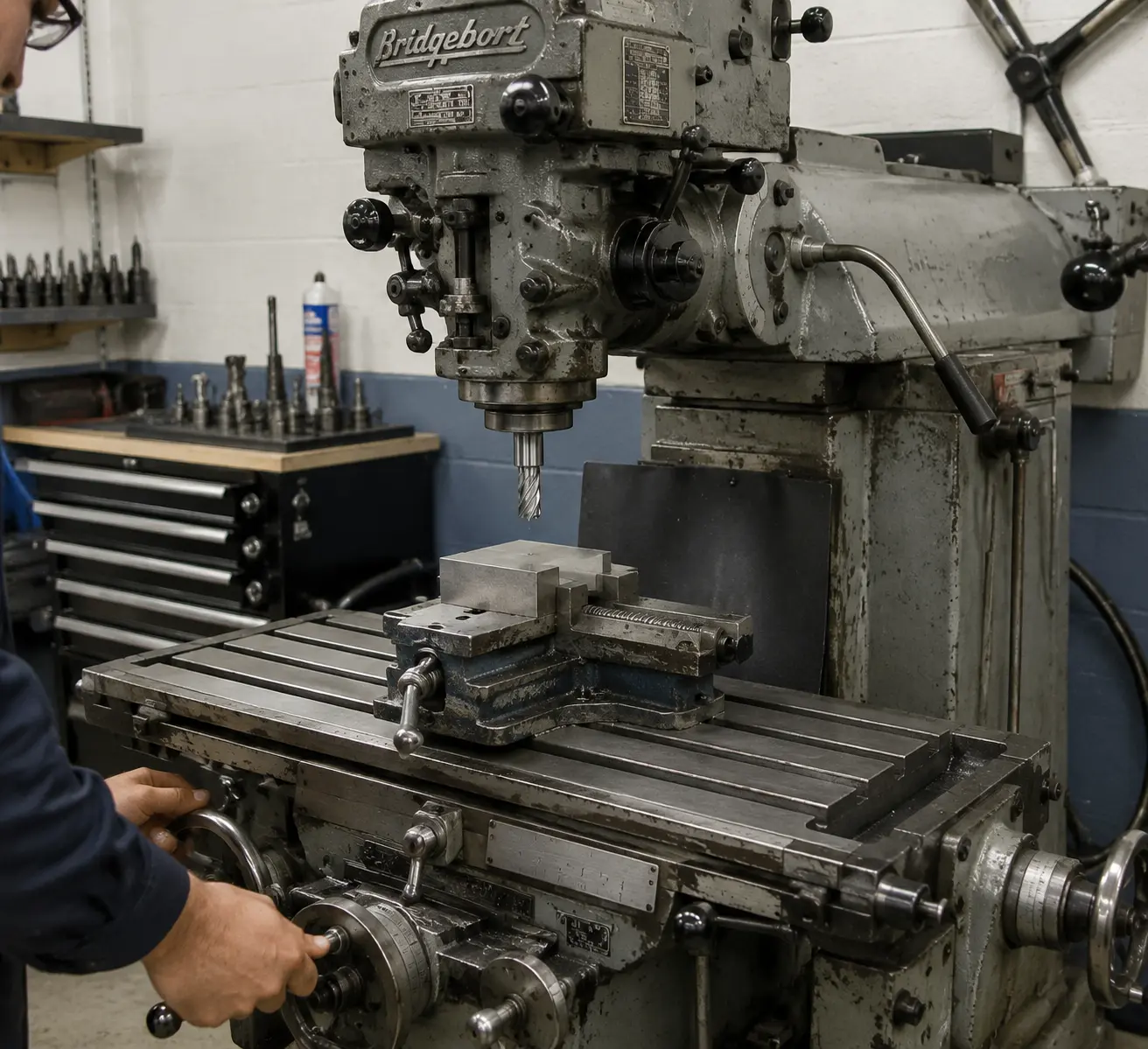
Carbide's greatest strength is its hardness and heat resistance, but that comes with a trade-off: it's brittle.[7] Think of it like glass versus plastic. Carbide is like glass; it's incredibly hard but shatters on impact. HSS is more like plastic; it's softer but can bend and flex without breaking. In an imperfect machining environment, that ability to "bend" is a huge advantage. As a supplier, I would never recommend a high-performance carbide tool for a situation where it's set up to fail. Sometimes, the "slower" tool that finishes the job is better than the "faster" tool that breaks.
Deeper Dive: The Right Scenarios for HSS
Don't let anyone tell you HSS is worthless. It's a specific tool for specific jobs, and it excels in conditions where carbide struggles.
1. Machine Rigidity and Age
Many shops run older or less-rigid machines. These machines can have vibrations in the spindle or frame that are a death sentence for a brittle carbide tool.[8] Carbide needs a very stable, rigid environment to perform at the high speeds it's designed for.[9] HSS, with its natural toughness, is much more forgiving of these vibrations. It can handle the chatter and less-than-perfect conditions without immediately chipping. If your machine is older or you are performing a long-reach operation, HSS is often the safer, more reliable choice.
2. Toughness Over Hardness
This is the most critical difference. Hardness allows a tool to resist wear and heat, which is why carbide can run so fast. Toughness allows a tool to resist chipping and breaking from impact.[10] When do you face impacts? In interrupted cuts, like milling a keyway or across a part with holes. Every time the flute re-enters the material, it's a small impact. On a rigid, modern CNC, carbide can handle this. But in a less stable setup, those impacts can easily chip a carbide tool's delicate cutting edge. HSS absorbs these impacts, giving you a more reliable process even if it's slower.
3. Low-Volume and Manual Machining
If you are a prototype shop or run manual mills, the math changes. You aren't trying to shave seconds off a 10,000-part run. You're trying to make one good part without breaking an expensive tool. The lower cost and forgiveness of HSS make it a perfect fit. It's less likely to break due to an unexpected hard spot in the material or a bit of operator error, making it a much lower-risk option for one-off jobs.
What Questions Should I Ask Before Buying in Bulk?
You have a big job coming up and need to stock up on end mills. Making the wrong choice means you could be stuck with thousands of dollars of useless tools and face production delays.
Before buying any end mills in bulk, you must know your exact workpiece material, your machine's capabilities (spindle speed and rigidity), and your production volume. This information determines which tool provides the lowest cost-per-part, ensuring your bulk purchase is a smart investment.

When a customer calls me and says, "I need 500 end mills, give me your best price," I always hit the brakes. The best price on the wrong tool is a terrible deal. A wrong bulk purchase is one of the costliest mistakes a shop can make. Instead of just giving a quote, I start asking questions. My goal is to protect my customer from that mistake. The right tool isn't just about the material (carbide vs. HSS); it's about the entire system. Getting these details right upfront is the key to a successful and profitable production run.
Deeper Dive: My Pre-Purchase Checklist for You
Here are the exact questions I ask to guide a customer toward the right decision. You should ask these same questions internally before placing any large order.
1. What is the Exact Workpiece Material?
"Steel" is not a good enough answer. Is it soft 1018 mild steel, or is it hardened D2 tool steel? Is it an abrasive aluminum alloy or a gummy 304 stainless steel? The material's hardness, abrasiveness, and machinability are the single biggest factors.[11] For tough, hardened, or abrasive materials, HSS will wear out so quickly that carbide is the only logical choice. For softer, easier-to-machine materials, you might have a choice, which leads to the next question.
2. What Does Your Machine and Setup Look Like?
I need to know about the machine itself. Is it a brand new, high-RPM vertical machining center, or a 20-year-old bed mill? A high-performance carbide tool is wasted if your spindle can only go up to 4,000 RPM.[12] More importantly, how is the part clamped? Is the tool holder a high-precision hydraulic or shrink-fit holder, or a simple collet chuck? A high-performance tool needs a high-performance setup. Putting an expensive, precision-ground carbide end mill in a worn-out tool holder is like putting cheap tires on a sports car; you'll never get the performance you paid for, and it can be dangerous.
3. What is the Production Volume and Deadline?
Is this a one-time job for 50 parts, or a recurring order for 5,000 parts per month? For the small job, reliability and low initial cost might be most important, pointing toward HSS in some cases. For the large, recurring job, cycle time is everything. Shaving even 30 seconds off each part adds up to massive savings in machine time over the entire run. In this scenario, investing in the right carbide tool to maximize speed and efficiency is almost always the correct financial decision.
Conclusion
The debate isn't about which tool material is better. It's about matching the right tool to your machine, material, and production goals to get the lowest total cost per part.
1
"(PDF) Study on carbide cutting tool life using various ...", https://www.academia.edu/121110744/Study_on_carbide_cutting_tool_life_using_various_cutting_speeds_for_%CE%B1_%CE%B2_Ti_alloy_machining. A university or technical machining reference explains that cemented carbide cutting tools generally maintain hardness and wear resistance at higher temperatures than high-speed steel and are therefore commonly used at higher cutting speeds; this supports the cost-per-part rationale in production contexts, although actual savings depend on machine capability, labor cost, and batch size. Evidence role: general_support; source type: education. Supports: A neutral machining reference should support that carbide tools generally retain hardness and wear resistance at higher cutting temperatures than HSS, allowing higher cutting speeds that can reduce machining time in production settings.. Scope note: The source would support the technical basis and typical production implication, not prove that every carbide end mill lowers cost per part in every job.
2
"[PDF] Cost and Process Information Modeling for Dry Machining", https://tsapps.nist.gov/publication/get_pdf.cfm?pub_id=821121. Machining economics literature treats cutting speed, tool life, and tool-change time as variables in unit-cost optimization, supporting the claim that a higher-priced tool can be economically justified when it increases throughput or reduces downtime; the analysis is model-based and must be applied with job-specific cost data. Evidence role: mechanism; source type: research. Supports: A source should explain how cutting speed, tool life, and tool-change downtime influence machining cost per part.. Scope note: This would support the economic mechanism rather than a universal price threshold for carbide tools.
3
"How to Calculate Machining Cost in Manufacturing ...", https://www.linkedin.com/posts/manickavasagam-natarajan_supplychain-purchase-design-activity-7373182823899459584-VcRB. Machining cost analyses commonly show that cutting-tool expense is only one component of total unit cost and is often outweighed by machine time, labor, and overhead, supporting the statement that purchase price alone is an incomplete basis for tool selection; percentages vary by shop, material, and production volume. Evidence role: statistic; source type: research. Supports: A source should provide a breakdown or discussion showing that tool cost is commonly a minor share of total machining cost relative to labor, overhead, and machine utilization.. Scope note: The source may provide representative cost structures rather than a value that applies to all machining operations.
4
"Carbide vs High Speed Steel - Facebook", https://www.facebook.com/titansofcnc/posts/carbide-vs-high-speed-steel-/1511833477182978/. Manufacturing engineering references describe cemented carbide as having higher hot hardness and wear resistance than high-speed steel, which allows carbide tools to be used at substantially higher cutting speeds; the precise speed increase depends on the work material, coating, geometry, and coolant conditions. Evidence role: mechanism; source type: education. Supports: A technical source should explain that carbide has greater hot hardness than HSS and can therefore operate at higher cutting temperatures and speeds.. Scope note: The source supports the general mechanism, not the exact speed setting for any particular end mill.
5
"High Speed Steel Lathe Cutters Versus Carbide - Again", https://www.hobby-machinist.com/threads/high-speed-steel-lathe-cutters-versus-carbide-again.33962/. Comparative machining data and cutting-speed tables often list recommended carbide cutting speeds at multiples of those for high-speed steel in the same work materials, providing contextual support for possible two- to three-fold increases in material removal rate when the machine and setup can sustain the higher parameters. Evidence role: statistic; source type: paper. Supports: A comparative study or reference table should show that recommended cutting speeds or material removal rates for carbide can be multiple times those for HSS under suitable conditions.. Scope note: This would contextualize the anecdote rather than verify the author's specific customer outcomes.
6
"An Investigation into the Surface Integrity of Micro-Machined ...", https://pmc.ncbi.nlm.nih.gov/articles/PMC10608892/. Cutting-tool materials references distinguish high-speed steel by its toughness and resistance to shock loads, while cemented carbide is characterized by high hardness and wear resistance but lower tolerance of impact and edge chipping; this supports the preference for HSS in unstable or interrupted conditions. Evidence role: mechanism; source type: education. Supports: A source should support that HSS has greater toughness and impact resistance, while carbide has greater hardness but lower fracture toughness.. Scope note: The source supports the general material-property trade-off, while individual grades and tool geometries can alter performance.
7
"[PDF] Advanced characterization techniques in cemented carbides", https://upcommons.upc.edu/bitstreams/757ac7e7-6c0a-4ca2-bcbe-e9a31484a18f/download. Reference works on cemented carbide describe it as a very hard, wear-resistant cutting-tool material capable of retaining performance at elevated temperatures, while also noting its relative brittleness compared with tougher steels; this supports the hardness-versus-toughness trade-off described here. Evidence role: definition; source type: encyclopedia. Supports: A neutral reference should define cemented carbide as a hard, wear-resistant material used for cutting tools and note its relative brittleness compared with tougher tool steels.. Scope note: The source would define general material behavior, not predict failure for a specific carbide end mill.
8
"Study of Wear, Stress and Vibration Characteristics of Silicon ... - PMC", https://pmc.ncbi.nlm.nih.gov/articles/PMC9694931/. Studies of milling chatter report that self-excited vibration degrades surface finish, accelerates tool wear, and can contribute to cutting-edge damage, providing technical support for avoiding brittle carbide tools in unstable machines or setups. Evidence role: mechanism; source type: paper. Supports: A paper should support that chatter and vibration in milling increase tool wear, reduce surface quality, and can cause edge chipping or tool failure.. Scope note: The evidence supports the failure mechanism but not the article's colloquial severity for every older machine.
9
"Maximize Efficiency with High Speed Machining Techniques", https://www.atlasfibre.com/maximize-efficiency-with-high-speed-machining-techniques/. Research on high-speed milling identifies machine-tool stiffness, spindle dynamics, tool-holder runout, and fixturing rigidity as key factors in stable cutting, supporting the claim that carbide tools need a rigid setup to exploit high-speed parameters reliably. Evidence role: mechanism; source type: research. Supports: A source should explain that high-speed milling depends on dynamic stiffness, low runout, and stable tool holding, and that insufficient rigidity promotes chatter and tool damage.. Scope note: This supports the stability requirement generally and may not single out every carbide grade or end-mill design.
10
"Understanding the Difference Between Hardness and ...", https://www.silcotek.com/blog/understanding-the-difference-between-hardness-and-wear-resistance. Materials science references define hardness as resistance to indentation and wear-related deformation, and toughness as the ability to absorb energy before fracture, supporting the article's distinction between wear resistance and resistance to chipping or breakage. Evidence role: definition; source type: education. Supports: A source should define hardness and toughness and explain how they relate to wear resistance and fracture or impact resistance in tool materials.. Scope note: The source would clarify the property definitions; heat resistance is related to hot hardness and alloy behavior rather than hardness alone.
11
"Selection of cutting tool material - Palbit", https://palbitusa.com/en/selection-of-cutting-tool-material. Machining handbooks and instructional materials treat workpiece material properties, including hardness, abrasiveness, and machinability, as primary inputs for selecting cutting-tool material, geometry, coating, and cutting conditions; this supports the article's emphasis on identifying the exact material before bulk purchasing. Evidence role: expert_consensus; source type: education. Supports: A machining reference should identify workpiece material properties such as hardness, abrasiveness, and machinability as key determinants of tool material, coating, and cutting parameters.. Scope note: The phrase 'single biggest factors' is a practical prioritization; other factors such as machine rigidity, coolant, and tolerance requirements can be equally important in some jobs.
12
"Surface feet per minute - Wikipedia", https://en.wikipedia.org/wiki/Surface_feet_per_minute. Machining references calculate cutting speed from spindle speed and tool diameter, showing that a low maximum RPM can prevent small end mills from reaching recommended carbide surface speeds; this supports the claim that machine capability can limit the benefit of high-performance carbide tooling. Evidence role: mechanism; source type: education. Supports: A source should explain the cutting-speed formula relating RPM, cutter diameter, and surface speed, showing why spindle limits can prevent use of recommended carbide cutting speeds.. Scope note: The 4,000 RPM example is illustrative; whether it is limiting depends on cutter diameter, work material, and recommended surface speed.