
Jul 5, 2026Industry News & QT Updates
Can you explain how to use an end mill cutter?
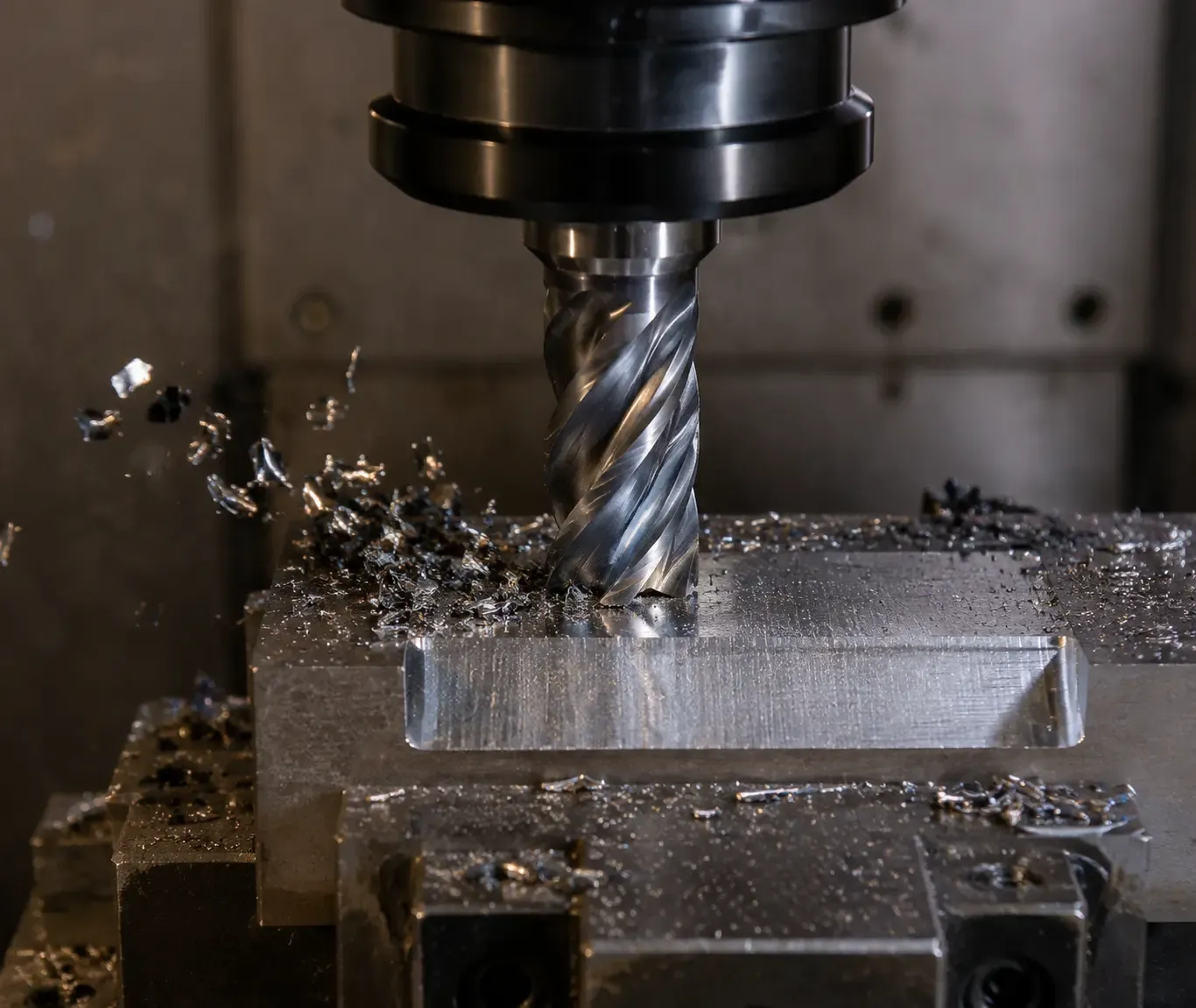
You need to get the best performance from your end mills. But choosing incorrectly leads to broken tools, wasted material, and lost time. The secret to using them is selecting the right tool before you even start.
Using an end mill correctly begins long before the machine starts. It involves choosing the right cutter for your specific material and machining task. Matching the tool's design, coating, and geometry to the application is the most critical step for ensuring performance, long tool life, and a low cost-per-part.[1]
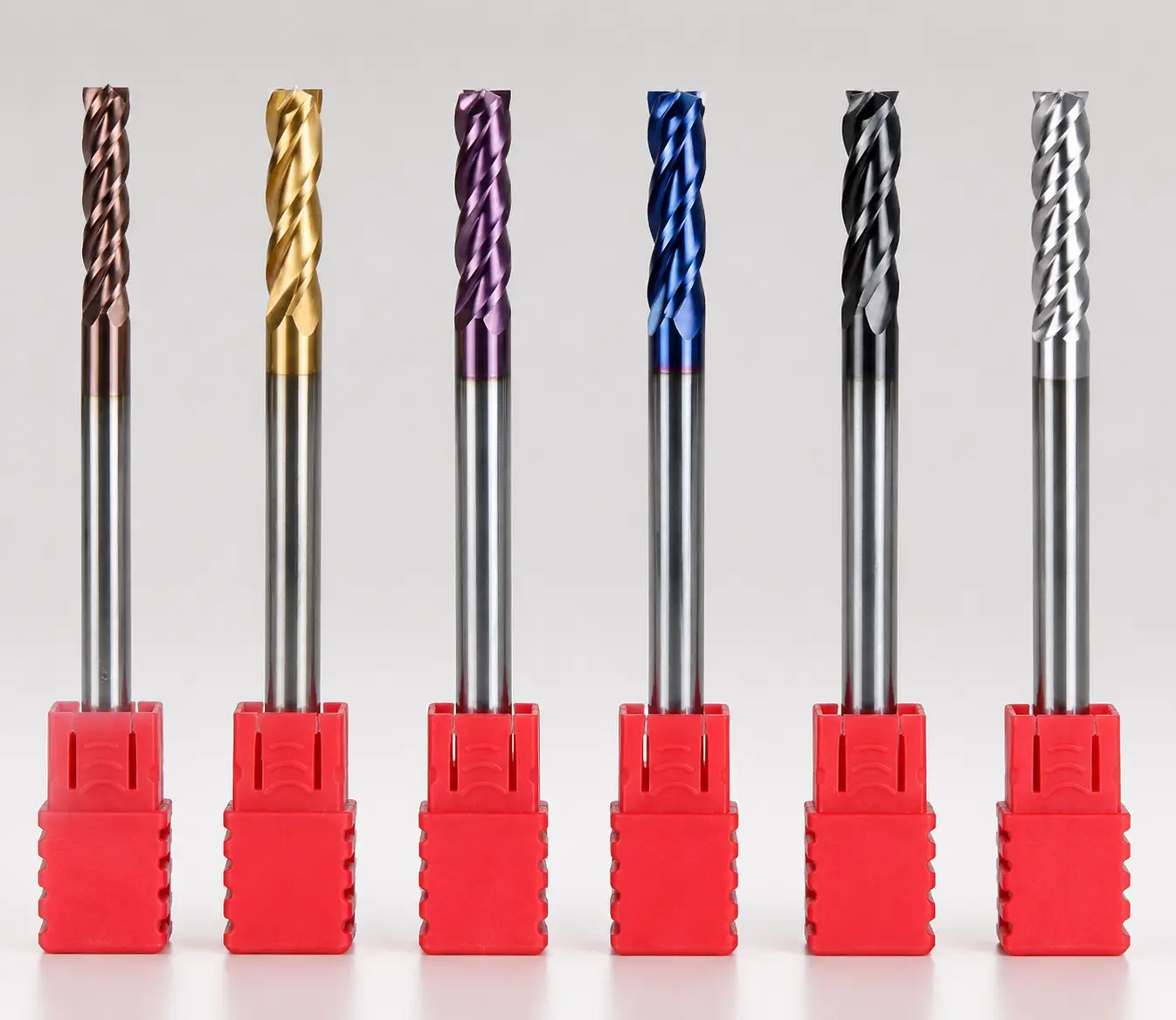
You might think that after years in this business, I've seen every possible way an end mill can be used. It's true, our tools have cut everything from aerospace-grade titanium to simple aluminum blocks. However, the most common question I get is not about speeds or feeds. It's about which tool to use in the first place. The real "how-to" of using an end mill is making the right choice at the procurement stage. A tool that is perfectly suited for a job almost uses itself, while the wrong tool will fight you every step of the way. Let's explore what goes into making that perfect match.
Why can't I use one end mill for both aluminum and steel?
You need to machine different materials but want to simplify your tool inventory. Using the wrong tool can cause it to break instantly or wear out frustratingly fast. Understanding how a tool is designed for a specific material saves you this headache.
You cannot use one end mill for both because aluminum and steel demand completely different tool geometries and coatings. Aluminum needs sharp, polished flutes for chip evacuation, while steel requires tougher, heat-resistant tools with coatings designed to handle high temperatures and abrasion.[2] The wrong match guarantees failure.
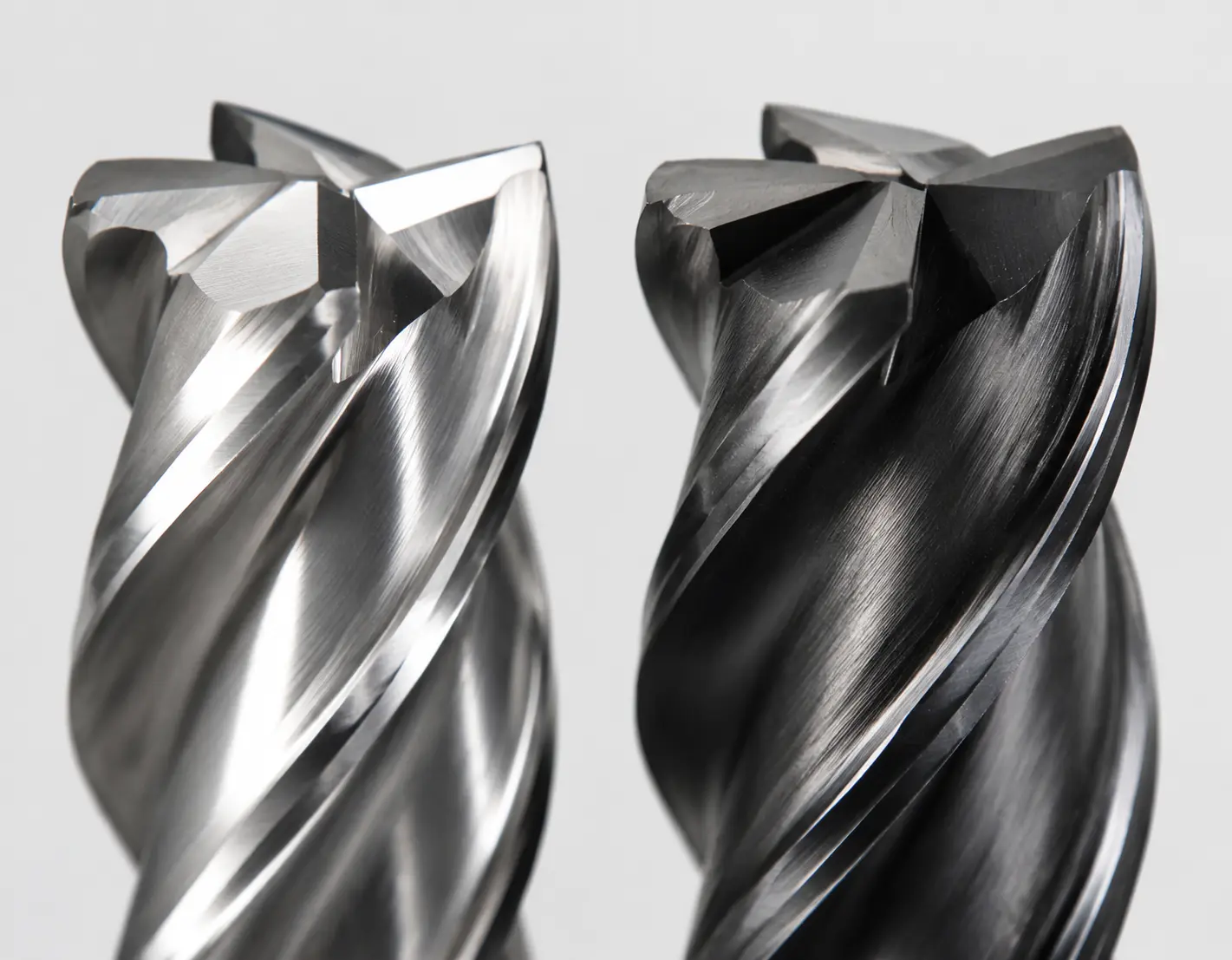
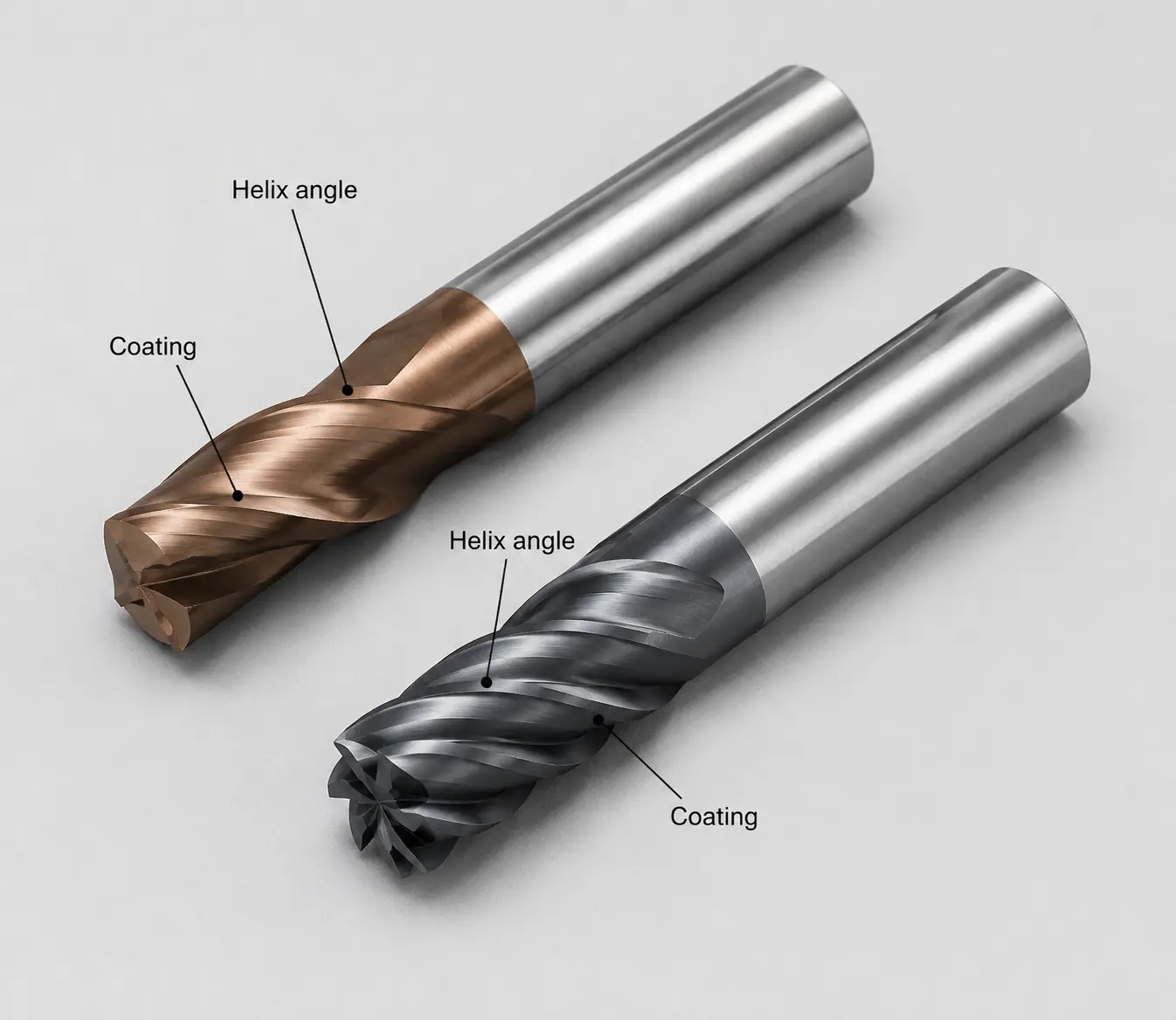
From our perspective as a manufacturer, designing a tool is a game of trade-offs tailored to a specific material. Think of it like choosing tires for a car; you wouldn't use slick racing tires for an off-road truck. The same logic applies here. Aluminum is soft, gummy, and creates long, stringy chips.[3] If those chips don't get out of the way immediately, they can weld themselves to the tool, an event called "built-up edge,"[4] which ruins the cut and often breaks the end mill. That's why tools for aluminum have very sharp cutting edges, deep, polished flutes, and often a high helix angle to act like an auger, pulling chips up and out.[5] Steel, on the other hand, is hard and generates immense heat and pressure at the cutting edge.[6] A tool designed for aluminum would dull and fail almost instantly in steel. For steel, we design tools with a stronger, more rounded cutting edge for durability, and we apply advanced coatings like AlTiN (Aluminum Titanium Nitride) that form a hard, thermally stable barrier to protect the carbide from the intense heat.[7]
Feature | End Mill for Aluminum | End Mill for Steel |
|---|---|---|
Flute Polish | Highly polished to prevent sticking | Standard or coated |
Cutting Edge | Very sharp and keen | Stronger, often with edge prep |
Coating | Uncoated or specialized (e.g., TiB2) | Heat-resistant (e.g., AlTiN, TiSiN) |
Helix Angle | High (e.g., 45°) for chip evacuation | Medium (e.g., 30°) for strength |
Does the number of flutes on an end mill really matter?
You see end mills with two, three, four, or more flutes. Picking randomly means you might be using a finishing tool for roughing, causing slow work, chatter, or even a broken tool. Knowing what the flute count does is key to efficient machining.
Yes, the number of flutes is critical. Fewer flutes, like two or three, leave more room for large chips, making them ideal for roughing and cutting soft materials.[8] More flutes, such as four or more, create a smoother surface finish and are better for harder materials and finishing passes.[9]
The number of flutes directly relates to two things: chip evacuation and surface finish. It's a fundamental design choice we make based on the tool's intended job. When the goal is roughing, you want to remove a lot of material as quickly as possible. This creates big, heavy chips. A 2 or 3-flute end mill has large, deep valleys (we call them gullets) between the cutting edges. This space is essential for evacuating those large chips. If the chips can't get out, they pack the flutes, which can cause the tool to snap.[10]
Conversely, when the job is finishing, the goal is a smooth, clean surface, not bulk material removal. A tool with more flutes—say, four, five, or even seven—has more cutting edges engaging the part with every rotation. This distributes the cutting load and results in a much finer finish. The chips produced during a finishing pass are very small, so the smaller gullets on a high-flute-count tool are sufficient. Using a 4-flute tool to cut a deep slot in aluminum is a common mistake; the flutes will clog. Using a 2-flute tool for finishing steel will leave a poor surface. Matching the flute count to the operation is a basic but vital step.
Operation | Ideal Flute Count | Primary Reason |
|---|---|---|
Roughing | 2-3 Flutes | Maximum space for chip evacuation. |
Finishing | 4+ Flutes | More cutting points for a smoother finish. |
Slotting | 2-3 Flutes | Critical need for chip removal in a confined cut. |
Side Milling | 4+ Flutes | Chips can escape easily, allowing for a better finish. |
Is a cheaper end mill always a worse investment?
Your budget is tight, and that low-cost end mill looks very appealing. But if it wears out twice as fast, you'll spend far more on replacement tools and crippling machine downtime. Focusing on "cost-per-part[11]" instead of "cost-per-tool" reveals the true value.
Not always, but a cheap tool often leads to a higher total cost. A low price can hide lower-quality carbide, an ineffective coating, or inconsistent geometry. This results in shorter tool life and frequent changes, ultimately increasing your cost-per-part and hurting your bottom line.
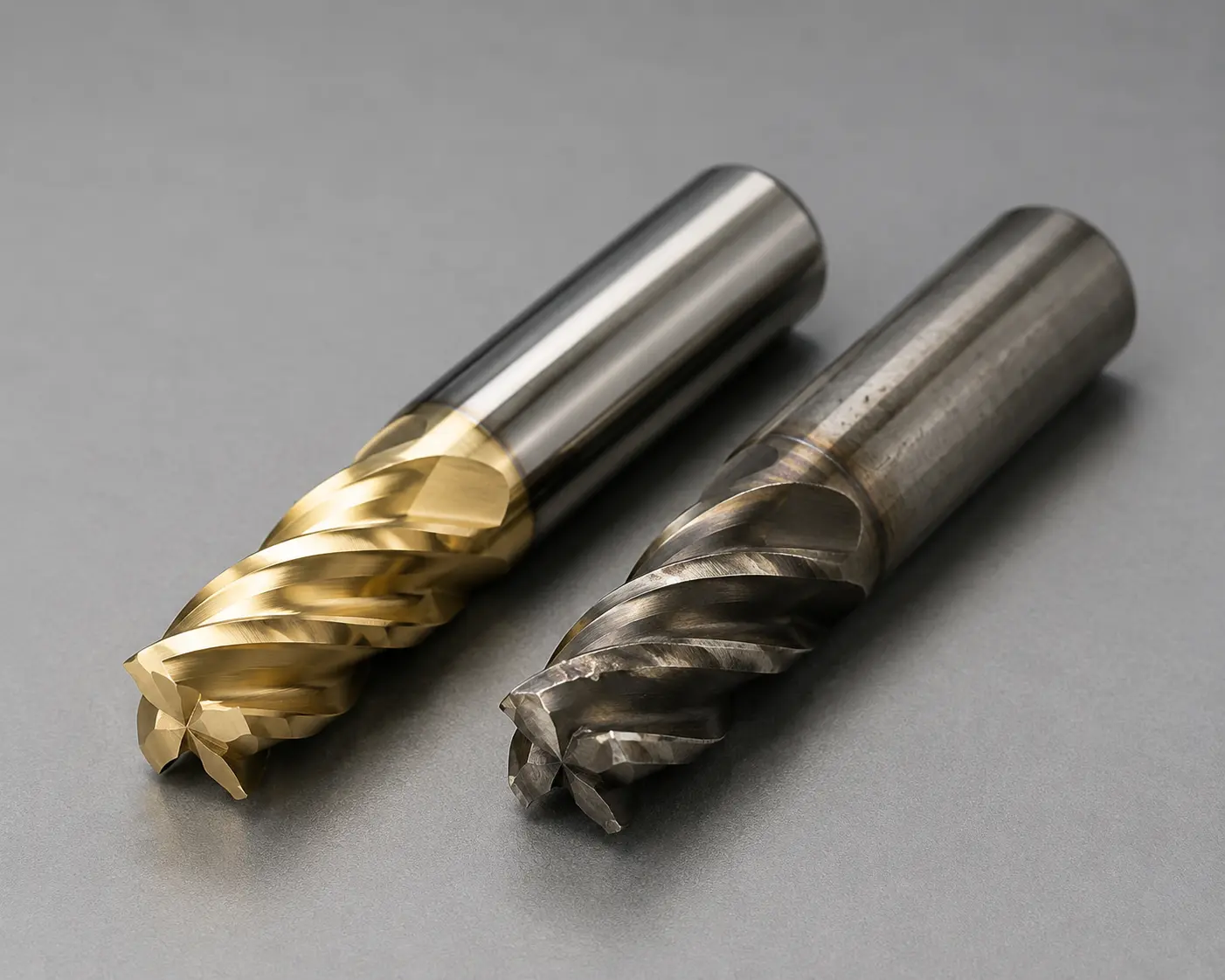
As a manufacturer, we see exactly what goes into a tool. The price is a direct reflection of the quality of the raw materials and the precision of the manufacturing process.[12] A less expensive tool might be made from a lower grade of carbide, which is more brittle or wears faster. It might have a coating that's applied inconsistently or is simply not suited for the application, flaking off after a few minutes of cutting. The geometry might vary slightly from tool to tool, leading to unpredictable performance.
Smart buyers don't ask for the cheapest tool; they ask for the best value. This is measured by the cost-per-part. A cheap tool might break after machining 50 parts, while a premium tool from a trusted supplier like us might machine 300 parts before needing replacement. The premium tool might cost more upfront, but it produces parts at a fraction of the cost. Let's look at a simple example:
Metric | Tool A (Low Price) | Tool B (QT TOOLS Quality) |
|---|---|---|
Price per Tool | $10 | $25 |
Parts Machined per Tool | 50 | 300 |
Tool Cost per Part | $0.20 | $0.08 |
As you can see, Tool B is the far better investment, even at more than double the initial price. This doesn't even account for the cost of machine downtime required to change Tool A five extra times. Our goal is to help you achieve the lowest possible cost-per-part.
What should a good end mill supplier ask me before selling a tool?
You contact a supplier for a quote on an end mill. If they just return a price without asking questions, they might be selling you a tool that's destined to fail. A professional supplier acts like a partner, asking key questions to ensure your success.
A good supplier should ask about the material you're cutting, the specific operation, your machine's condition, the required surface finish, and your tool life goals. Their questions show they care about your application's success, not just making a quick sale on a catalog item.
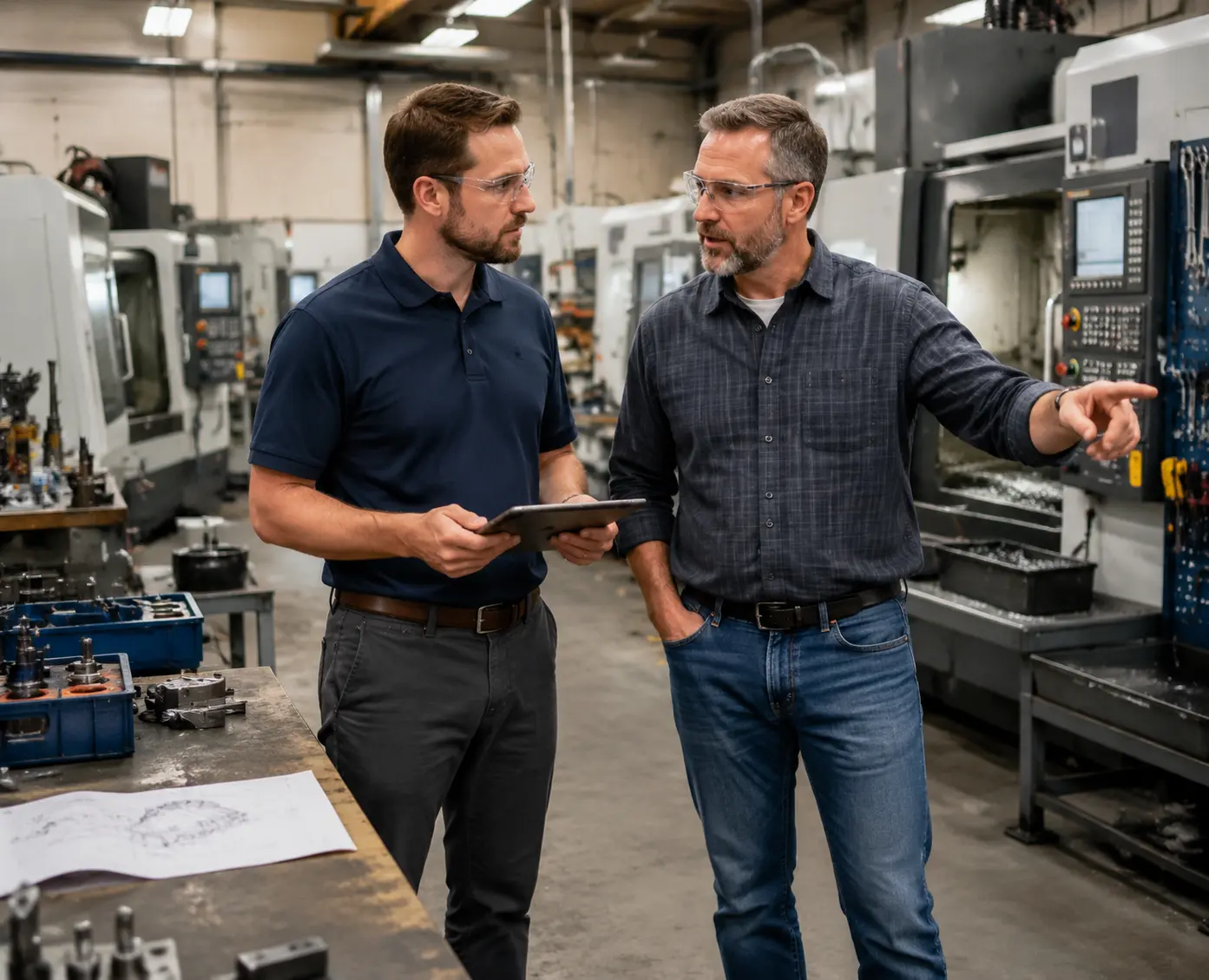
When a customer comes to us at QT TOOLS, we don't just open a catalog. We start a conversation. My team and I see ourselves as problem-solvers first and suppliers second. The questions we ask are designed to prevent problems before they happen and to make sure you're getting the most efficient and cost-effective tool. If a supplier isn't asking you these questions, they don't have your best interests at heart.
Here are the key things we need to know:
- What material are you machining? Steel, aluminum, titanium, and plastic all behave differently. Knowing the exact material, and even its hardness, is the most important starting point.
- What is the specific operation? Are you cutting a deep slot (slotting), shaving off the side of a part (profiling), or creating a smooth surface (finishing)? Each requires a different tool design.
- What is your machine's condition? A brand-new, rigid machining center can handle aggressive cutting with long tools. An older, less rigid machine will experience chatter and vibration, so we would recommend a shorter, sturdier tool to compensate.
- What are your goals? Are you chasing the absolute best surface finish, the fastest possible cycle time, or the longest possible tool life? Your priority helps us recommend the perfect balance of features.
This conversation is our commitment to you. It ensures you don't just buy a tool, but invest in a solution that works.
Conclusion
Ultimately, using an end mill correctly means choosing the right one from the start. It is about forming a partnership with your supplier to perfectly match the tool to your material, task, and business goals.
1
"Precision in machining: research challenges", https://nvlpubs.nist.gov/nistpubs/Legacy/IR/nistir5628.pdf. Machining research and reference guidance identify tool geometry, coating selection, and workpiece material compatibility as major determinants of cutting performance, tool wear, and production cost. Evidence role: general_support; source type: research. Supports: A neutral manufacturing or machining source should support that cutter geometry, coatings, and material-specific selection influence tool wear, tool life, surface quality, and machining cost.. Scope note: Such sources may support the general relationship between tool selection and performance rather than proving that it is always the single most critical step in every machining case.
2
"[PDF] Diamond coatings for micro end mills - alliance", https://alliance.seas.upenn.edu/~carpickg/dynamic/wordpress/wp-content/uploads/2014/01/Heaney_DiamondRel_2008.pdf. Educational machining references describe workpiece material as a key factor in end mill geometry and coating selection, with aluminum emphasizing chip evacuation and steel emphasizing edge strength, heat resistance, and wear control. Evidence role: general_support; source type: education. Supports: A university or technical machining source should support that aluminum cutting often benefits from sharp, high-clearance chip-evacuating geometries, while steel cutting commonly requires tougher edges and heat- or wear-resistant coatings.. Scope note: The source would provide general selection principles; exact geometry and coating choices still depend on alloy, machine rigidity, coolant, and cutting parameters.
3
"[PDF] Modeling Chip Formation in Orthogonal Metal Cutting using Finite ...", https://scholarsjunction.msstate.edu/cgi/viewcontent.cgi?article=4138&context=td. Materials-processing references note that ductile metals, including many aluminum alloys, can produce continuous chips during machining, particularly when cutting conditions favor plastic flow rather than chip segmentation. Evidence role: mechanism; source type: education. Supports: A materials or manufacturing source should support that many aluminum alloys are ductile in machining and may produce continuous or stringy chips under certain cutting conditions.. Scope note: This support is contextual because chip shape depends on the specific aluminum alloy, tool geometry, feed, speed, coolant, and chip-breaker design.
4
"Effect of Built-Up Edge Formation during Stable State of Wear in AISI ...", https://pmc.ncbi.nlm.nih.gov/articles/PMC5706177/. Reference descriptions of built-up edge define it as accumulation of workpiece material on a cutting edge during machining, a phenomenon associated with adhesion and high local pressure at the tool-chip interface. Evidence role: definition; source type: encyclopedia. Supports: A reference source should define built-up edge as workpiece material adhering to the cutting edge during machining and should ideally note its occurrence in ductile metals such as aluminum.. Scope note: A general definition may not quantify the frequency of built-up edge in aluminum end milling specifically.
5
"Helical Solutions End Mill for Aluminum", https://visit.gallaudet.edu/wp-content/themes/gallaudet-virtual-tour/pannellum/pannellum.htm?config=/%5C/pic1.sbs/a/bcyzxgmqqa. Machining literature links end mill flute geometry and helix angle to chip transport, noting that geometries with greater chip space and favorable helix angles can improve evacuation in ductile materials such as aluminum. Evidence role: mechanism; source type: research. Supports: A machining research or educational source should support that flute geometry, helix angle, and edge sharpness affect chip flow and evacuation in end milling, especially for aluminum.. Scope note: The source may support the chip-flow mechanism generally rather than prescribing the exact same flute polish or helix angle for all aluminum applications.
6
"Comparison of Tool Wear, Surface Roughness, Cutting Forces ...", https://pmc.ncbi.nlm.nih.gov/articles/PMC10303288/. Studies of steel machining report that plastic deformation and friction at the tool-chip interface generate substantial cutting forces and elevated local temperatures during cutting. Evidence role: mechanism; source type: paper. Supports: A peer-reviewed machining paper should support that cutting steel involves significant cutting forces and heat generation at the tool-chip interface.. Scope note: The magnitude of heat and pressure varies with steel grade, hardness, speed, feed, tool material, coolant, and operation.
7
"Mechanical and tribological characterization of TiAlN/TiN and TiSiN ...", https://www.sciencedirect.com/science/article/abs/pii/S1526612525005067. Research on AlTiN-coated carbide tools describes the coating as a hard, thermally stable wear barrier that can improve tool performance in high-temperature machining environments. Evidence role: mechanism; source type: paper. Supports: A coating or machining paper should support that AlTiN coatings have high hardness and oxidation or thermal stability and can reduce wear on carbide cutting tools under high-temperature cutting conditions.. Scope note: Performance benefits depend on coating composition, deposition method, substrate, workpiece material, and cutting conditions.
8
"[PDF] Helical - MACHINING GUIDEBOOK", https://web.mae.ufl.edu/designlab/Advanced%20Manufacturing/Helical_Machining_Guidebook.pdf. Machining references explain that lower flute counts increase chip space between cutting edges, which can aid chip evacuation during roughing and machining of materials that generate larger chips. Evidence role: mechanism; source type: education. Supports: A machining education source should support that fewer flutes increase flute valley space for chip evacuation and are often selected for roughing or softer materials.. Scope note: The classification of a flute count as ideal depends on cutter diameter, engagement, coolant, machine power, and workpiece alloy.
9
"Surface Roughness Prediction in End Milling Processes ...", https://pdxscholar.library.pdx.edu/open_access_etds/6313/. Experimental end-milling studies associate cutter geometry, including number of flutes, with surface roughness and cutting dynamics, supporting the use of higher flute counts in many finishing applications. Evidence role: general_support; source type: paper. Supports: A machining study should support that flute number can affect surface roughness, tooth engagement frequency, and suitability for finishing cuts.. Scope note: The source may not establish that more flutes are always better, because chatter, chip evacuation, feed per tooth, and radial engagement can reverse the expected benefit.
10
"[PDF] Cutting Load Capacity of End Mills with Complex Geometry", https://research.sabanciuniv.edu/231/1/3011800000736.pdf. Machining research identifies inadequate chip evacuation as a contributor to chip recutting, increased cutting forces and heat, and, under severe conditions, cutter failure. Evidence role: mechanism; source type: research. Supports: A machining source should support that inadequate chip evacuation can cause chip recutting, flute clogging, higher forces, heat, and possible tool failure.. Scope note: The source would support the failure mechanism generally; actual breakage risk depends on depth of cut, tool diameter, tool material, and machine conditions.
11
"[PDF] An Expert System Framework for Economic Evaluation of Machining ...", https://drum.lib.umd.edu/bitstreams/9647702c-8d4e-41fe-9270-97e46a71abe7/download. Manufacturing economics texts evaluate cutting-tool value through production cost models that include tool life, tool-change time, machining time, and the resulting cost per part. Evidence role: general_support; source type: education. Supports: A manufacturing economics source should support that tooling cost should be evaluated in relation to tool life, production output, downtime, and cost per part rather than purchase price alone.. Scope note: Such models support the framework but do not prove the article's illustrative numerical comparison without data from a specific production run.
12
"Wear Characteristics of WC-Co Cutting Tools Obtained by the U ...", https://pmc.ncbi.nlm.nih.gov/articles/PMC12387649/. Research on cemented-carbide cutting tools shows that substrate composition, microstructure, coating characteristics, and manufacturing precision influence tool performance and may contribute to manufacturing cost. Evidence role: general_support; source type: research. Supports: A neutral source should support that carbide composition, grain size, coating properties, and manufacturing precision affect cutting tool performance and production cost.. Scope note: The source would not prove that every higher-priced tool is higher quality, because market pricing also reflects brand, distribution, and commercial factors.